

Why Seasonal Roof Maintenance Matters
Your roof is one of the largest and most expensive components of your home, yet it's easy to overlook until something goes wrong. A proactive, season-by-season approach to roof care can extend the life of your roofing system, protect your home's interior, and help you catch small problems - a cracked shingle, a loose flashing joint - before they evolve into water intrusion or structural damage.
The average asphalt shingle roof is designed to last 20-30 years, but that lifespan depends heavily on how well it's maintained. Neglected gutters, unaddressed storm damage, and poor attic ventilation can all shorten that timeline significantly. Fitting roof checks into your broader home upkeep rhythm is a straightforward way to protect that investment. For a complete picture of what to tackle throughout the year, see your home's annual maintenance calendar.
20-30 years
Typical asphalt shingle roof lifespan
Industry estimates suggest proper maintenance is a key factor in reaching the upper end of that range.
150°F+
Peak summer attic temperatures without proper ventilation
The U.S. Department of Energy notes that poorly ventilated attics can reach extreme temperatures, accelerating material breakdown.
~$10,000-$15,000
Median cost of full roof replacement (2,000 sq ft home)
Cost estimates vary widely by region, materials, and labor; preventive maintenance helps defer this major expense.
Spring: Post-Winter Inspection and Cleanup
Spring is the single most important time for a roof inspection. Winter weather - freeze-thaw cycles, ice, heavy snow, and high winds - puts enormous stress on roofing materials. Once temperatures stabilize, walk the perimeter of your home and use binoculars to scan the roof from the ground.
Look for: missing, curling, or cracked shingles; granule loss (the sand-like material that coats asphalt shingles, which you may notice collecting in downspout discharge areas); damaged or lifted flashing around chimneys, vents, and skylights; and sagging areas that may indicate moisture damage to the roof deck below.
Inside your attic, check for daylight penetrating through the roof boards, water stains on rafters or sheathing, and signs of mold or mildew - all indicators that moisture has found a way in. Spring is also the time to clear any debris that accumulated over winter and flush out your gutters. Functioning gutters are closely tied to roof health; learn more in our guide to how gutters work and when to clean them. For a broader spring task list, 14 spring maintenance tasks is a helpful companion resource.
Do your spring inspection from the ground using a good pair of binoculars - you can spot curled shingles, missing granules, and lifted flashing without the fall risk of climbing on a wet or brittle roof.
Post-winter roofs may have weakened areas that aren't visible but can give way under foot traffic, making ground-level observation the safer and surprisingly effective first step.
When checking the attic after winter, bring a flashlight and look for staining that follows a diagonal line along rafters - this pattern often traces back to a specific flashing failure rather than a generalized leak.
Diagonal water staining is a reliable diagnostic clue that narrows down where a roofing professional should focus their inspection, saving time and money on repairs.
Summer: Heat, UV, and Ventilation Checks
While summer storms get attention, the slow, steady damage from prolonged heat and ultraviolet (UV) radiation is just as consequential. High temperatures cause roofing materials to expand; repeated expansion and contraction over years weakens shingles and can loosen fasteners. In climates with intense sun, asphalt shingles may become brittle and crack faster than in temperate regions.
Summer is a good time to assess your attic ventilation. Poor ventilation traps heat in the attic - sometimes exceeding 150°F - which accelerates shingle deterioration from below and forces your HVAC system to work harder. Look for ridge vents, soffit vents, or gable vents and ensure none are blocked by insulation, debris, or bird nests. Adequate airflow helps moderate attic temperatures year-round.
After any significant summer storm, do a quick visual scan for lifted or missing shingles, and check that any satellite dish or antenna mounts haven't shifted and compromised the surrounding roofing material.
Fall: Clearing Debris and Preparing for Cold
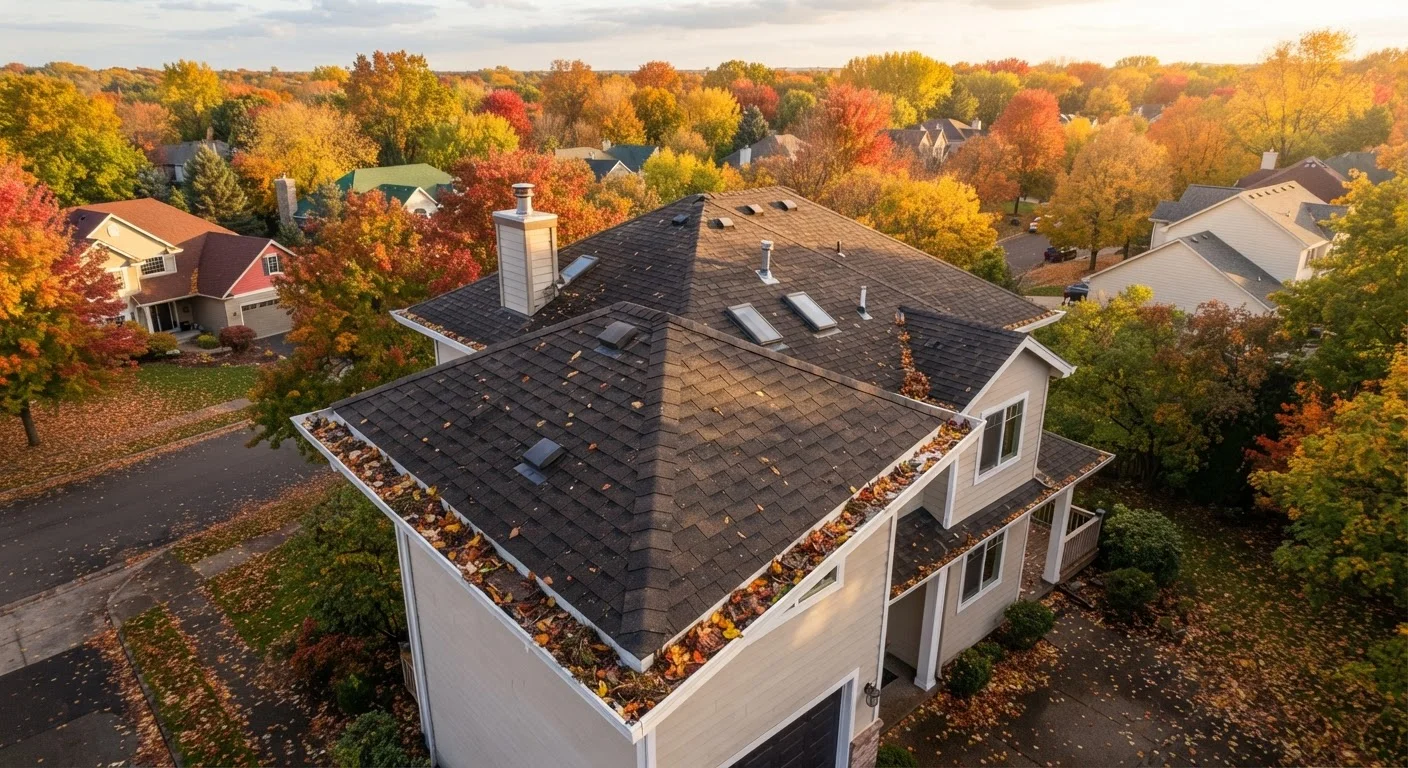
Fall is your last real opportunity to address roof vulnerabilities before cold weather locks in. Leaves and organic debris that accumulate on the roof trap moisture and promote the growth of moss and algae, both of which can degrade shingles over time. Use a roof rake or hire a professional to clear heavy debris accumulations - never use a pressure washer, which can strip protective granules from asphalt shingles.
Clean your gutters thoroughly after leaves have finished falling (typically late November in most of the U.S.). Clogged gutters cause water to back up under shingles and can contribute directly to ice dam formation in winter. Inspect gutter hangers and downspout connections while you're at it.
Check that all flashing - the metal strips that seal transitions between the roof and vertical surfaces - is firmly adhered and free of rust or gaps. Caulk deterioration around flashing is common and inexpensive to address in fall, but costly to ignore once ice and water infiltrate. For a comprehensive fall home audit, see what to inspect before cold weather arrives.
Don't Wait Until After the First Freeze
Flashing gaps, loose shingles, and clogged gutters are far easier and less expensive to address in dry, mild fall weather than after ice or snow has infiltrated. Once water freezes inside a gap in the roofing system, it expands and widens that gap - turning a minor repair into a significant one. Make your fall roof checklist a priority before temperatures consistently drop below freezing.
Winter: Ice Dam Prevention and Storm Monitoring
Ice dams form when heat escaping through the roof melts snow near the ridge, which then refreezes at the colder eaves. The resulting ice wall prevents meltwater from draining, forcing it under shingles and into your home. The long-term solution is improving attic insulation and ventilation so the roof surface stays uniformly cold - not a quick fix, but the most effective one.
In the short term, a roof rake (used from the ground) can remove snow from the lower few feet of the roof after major snowfalls, reducing the amount of meltwater available to pool. Avoid using rock salt or calcium chloride directly on shingles; these substances can accelerate granule loss and corrode metal components. Calcium chloride in a nylon stocking laid perpendicular to the eave is a commonly used temporary measure, but consult a roofing professional before attempting any chemical application.
During winter storms, avoid inspecting the roof directly - ice and wet surfaces make this extremely hazardous. Instead, watch for interior warning signs: water stains appearing on ceilings, ice formations on exterior walls, or icicles that seem unusually large and wide at the base (a sign of dam buildup). If you suspect active ice dam damage, contact a licensed roofing contractor promptly.
When to Call a Roofing Professional
Many basic roof observations - scanning from the ground, checking the attic interior, clearing gutters - are reasonable DIY tasks. But several situations call for a licensed, insured roofing contractor rather than a homeowner with a ladder:
- Any repair involving walking on the roof surface - this requires proper safety equipment and experience.
- Flashing replacement or re-sealing around chimneys, skylights, or vents.
- Suspected structural damage - sagging, soft spots, or visible deck deterioration.
- Storm damage claims - a contractor can document damage for insurance purposes accurately.
- Roof age and end-of-life assessment - if your roof is approaching 20 years, a professional inspection can tell you whether repairs or full replacement makes more sense.
Note that roofing work in many jurisdictions requires permits, particularly for full replacements or structural repairs. Always verify local requirements and ensure any contractor you hire is licensed and carries liability insurance and workers' compensation coverage. If you're new to managing these types of decisions, getting started with home maintenance as a first-time owner offers useful grounding on how to evaluate contractors and understand what to ask.
This article is for general informational purposes only. Roofing work involves fall hazards and potential structural risks. Always prioritize safety and consult a licensed roofing professional for any repair, inspection requiring roof access, or work that may be subject to local building codes and permits.
The content on this site is provided for informational purposes only and should not be considered a substitute for professional advice. While we strive to provide accurate and up-to-date information, we make no guarantees regarding its completeness or accuracy. Always consult a qualified professional for advice specific to your circumstances before making any decisions