

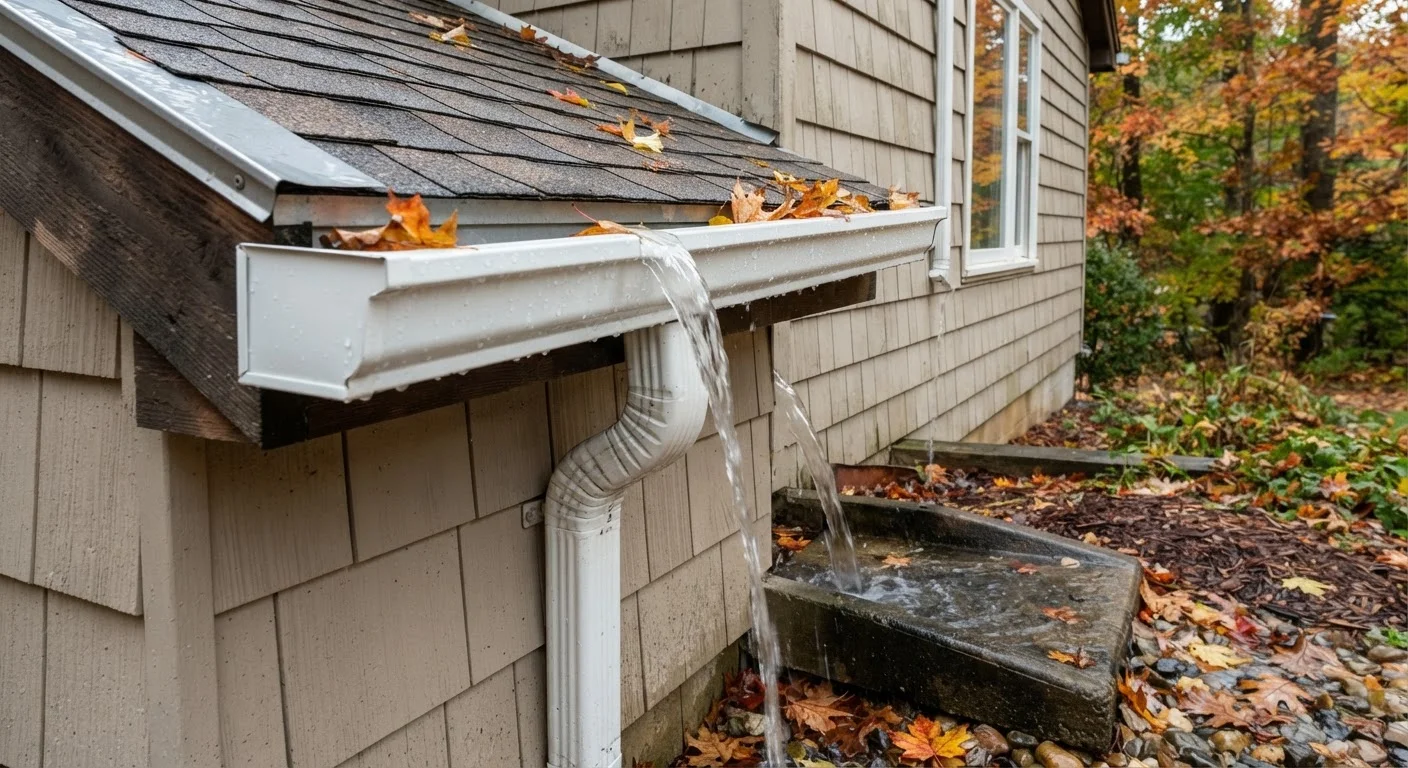
What Gutters Actually Do
Gutters serve one essential purpose: controlling where water goes when it leaves your roof. A single inch of rainfall on a 2,000-square-foot roof produces more than 1,200 gallons of runoff. Without gutters to capture and redirect that volume, it cascades directly along your foundation, soaks into the soil against your basement walls, saturates your landscaping beds, and splashes up against your siding repeatedly throughout the year.
The gutter system works as a team. The gutter channel catches water at the roofline. Downspouts carry it vertically down the wall. Extensions or splash blocks at the base direct it away from the house - ideally at least 4 to 6 feet from the foundation. When any part of that chain fails, the rest of the system is compromised.
Gutters also protect your fascia boards (the wood trim along the roofline) from constant moisture exposure. Rotting fascia is a common and costly consequence of gutters that overflow or hold standing water. You can learn more about how water intrusion escalates in our article on why small water leaks become expensive problems.
1,200+
Gallons of runoff per inch of rain on a 2,000 sq ft roof
Calculated using the standard roofing industry formula: roof area (sq ft) × rainfall (inches) × 0.623 = gallons.
2x/year
Minimum recommended gutter cleaning frequency
Most home maintenance guidelines recommend cleaning at least twice annually - late spring and late fall - as a baseline.
4-6 ft
Minimum distance water should exit from the foundation
Building and drainage professionals commonly recommend downspout extensions direct water at least 4 to 6 feet away from the home's foundation.
When and How to Clean Your Gutters
Cleaning gutters is straightforward work, but timing matters. The two most productive windows are late spring - after flowering trees have finished dropping seeds and pollen - and late fall, once most leaves have come down. Cleaning too early in fall means leaves will continue filling the gutters after you've finished.
For a safe DIY cleaning, use a sturdy extension ladder positioned on firm, level ground. Work in sections, scooping debris by hand or with a gutter scoop into a bucket. Flush each section with a garden hose to clear fine particles and confirm the downspout is draining freely. If water backs up at the downspout, use the hose at pressure from the bottom opening to clear blockages.
Test Your Downspouts While You Clean
After clearing debris from the gutter channel, run a garden hose from the downspout opening at ground level upward to dislodge any hidden clogs. If water backs up quickly, there's a blockage inside the downspout pipe that flushing from the top won't clear. Catching this during routine cleaning prevents overflow problems during the next heavy rain.
Homes surrounded by pine trees, maples, or other heavy-shedding species may need cleaning three or four times per year. If debris consistently builds up between cleanings, gutter guards may reduce - though not eliminate - maintenance frequency.
If your roof pitch is steep, or if you're uncomfortable working at height, this is a task worth hiring out. Falls from ladders are among the most common home maintenance injuries. For an overview of exterior upkeep that pairs well with gutter work, see our guide to pressure washing your home's exterior.
Warning Signs Your Gutters Need Attention
You don't always need to get on a ladder to spot gutter problems. Several ground-level clues indicate the system isn't doing its job:
- Water overflow during rain: If water spills over the front edge of the gutter rather than flowing to the downspout, the gutter is either clogged or improperly sloped.
- Sagging sections: Gutters pulling away from the fascia or visibly drooping indicate debris weight, failed hangers, or rotting fascia behind them.
- Staining on siding: Long vertical streaks on your home's exterior often mean water is running behind or over the gutter edge.
- Peeling paint near the roofline: Persistent moisture from a malfunctioning gutter accelerates paint failure on fascia and trim boards.
- Pooling water or erosion near the foundation: Trenches, bare soil channels, or puddles directly below the roofline suggest water is hitting the ground rather than being directed away.
- Basement dampness after heavy rain: This is a downstream symptom worth investigating. See our article on basement moisture sources and what homeowners can do for a fuller picture.
A homeowner notices a trench forming in the mulch directly below the corner of the roofline each time it rains.
After a wet autumn, a homeowner sees white, chalky staining on the brick near the base of the foundation and notices the basement floor is damp.
During a heavy spring rain, a homeowner watches water pour over the front lip of the gutter rather than toward the downspout at the end.
Keeping the Full System Healthy
Gutters don't work in isolation. Their effectiveness depends on a few other conditions around the home:
Roof condition: Damaged shingles or missing drip edge can direct water behind the gutter rather than into it. Coordinate gutter inspections with periodic roof checks - our seasonal roof maintenance guide covers what to look for throughout the year.
Downspout placement: Downspouts should empty well away from the foundation. Extensions, buried drain pipes, or grading adjustments can all help move water further from the house. Poor gutter drainage is also a contributor to lawn drainage problems that homeowners often overlook.
Grading around the home: The soil adjacent to your foundation should slope away at roughly 6 inches over 10 feet. Even a well-functioning gutter system is less effective if the surrounding grade directs water back toward the structure.
Gutters rarely fail dramatically all at once - they degrade gradually through neglect. Twice-yearly cleaning, a visual inspection from the ground after major storms, and prompt repair of sagging or separated sections will keep the system doing its job for many years.
Permits and Professional Work
Most routine gutter cleaning and minor repairs don't require permits. However, replacing gutters entirely, modifying downspout drainage into underground pipes, or making changes near the roofline may require permits or a licensed contractor depending on your local code. Check with your local building department before undertaking significant gutter system changes.
Frequently Asked Questions
Most homes benefit from cleaning gutters at least twice a year - once in late spring after trees finish seeding, and again in late fall after leaves have dropped. Homes surrounded by pine trees may need cleaning three or four times annually due to needle accumulation.
Debris-packed gutters hold moisture and become heavy, leading to sagging, pulling away from the fascia, or complete detachment. Overflowing water can damage siding, erode soil around the foundation, and contribute to basement moisture problems. Over time, the cost of repairs far exceeds the cost of routine cleaning.
After a rainstorm, check whether water is standing in the gutter channel rather than draining toward the downspout. Gutters should slope roughly a quarter inch for every 10 feet of run toward the downspout. Improper pitch is a common cause of overflowing and pooling.
Gutter guards can reduce - but rarely eliminate - the frequency of cleaning. Their effectiveness varies widely by design and the type of debris common in your area. They are generally considered most useful for homes with heavy tree coverage, though they still require periodic inspection.
Yes. When gutters overflow, water pools against the base of the home. Over time, this saturates the soil around the foundation, increases hydrostatic pressure, and can lead to cracks or basement water intrusion. Proper gutter drainage is one of the first lines of defense against foundation issues.
Call a professional if you notice gutters pulling away from the roofline, visible cracks or rust, persistent overflow despite cleaning, or if your roof pitch makes ladder access unsafe. Some repairs - especially those near the fascia or involving roof flashing - are best handled by a licensed contractor.
The content on this site is provided for informational purposes only and should not be considered a substitute for professional advice. While we strive to provide accurate and up-to-date information, we make no guarantees regarding its completeness or accuracy. Always consult a qualified professional for advice specific to your circumstances before making any decisions