

Start here
Choosing the Right Spot
Next
Preparing Your Soil
Then
What to Plant First
Keep it growing
Watering, Feeding, and Basic Upkeep
Avoid setbacks
Common Beginner Mistakes to Avoid
Choosing the Right Spot
Location is the single decision that shapes everything else about your garden. Vegetables are sun-hungry plants - most need at least six hours of direct sunlight per day, with eight hours being better for fruiting crops like tomatoes and peppers. Before you dig a single hole, spend a day observing your yard and noting which areas are in full sun and which are shaded by trees, fences, or the house.
Beyond sunlight, consider these factors:
- Proximity to water: Locate your garden close enough to a hose bib or spigot that watering doesn't feel like a chore. A long drag across the yard is a reliable motivation-killer.
- Level ground: Slightly sloped ground can cause water to run off before it soaks in. Flat or gently graded areas retain moisture more evenly.
- Distance from large trees: Mature tree roots compete aggressively for water and nutrients, and tree canopies block light. Keep at least 10 feet of clearance if you can.
If your best sunny spot is a stretch of lawn, that's fine - turf can be removed by cutting sod with a flat spade and composting or disposing of it. Starting your first garden alongside broader home upkeep? Our home maintenance guide for first-time owners covers the big-picture thinking that keeps a property running smoothly.
Preparing Your Soil
Healthy soil is the foundation of a productive garden. Most native yard soil needs improvement before it will support vegetables well. The goal is a loose, well-draining mix rich in organic matter - conditions that support root growth, beneficial microbes, and nutrient availability.
Soil pH
A measure of how acidic or alkaline your soil is, on a scale of 0-14. Most vegetables grow best between 6.0 and 7.0, which is slightly acidic to neutral.
Compost
Decomposed organic matter - like food scraps and yard waste - that is mixed into soil to improve its structure, drainage, and nutrient content.
Last frost date
The average calendar date after which freezing temperatures are unlikely in your area. Warm-season vegetables should not be planted outdoors before this date.
Days to maturity
The number of days from planting (or transplanting) until a vegetable is ready to harvest, as listed on seed packets or plant tags.
Direct sow
Planting seeds directly into the garden soil outdoors, rather than starting them in containers indoors first.
Transplant
A young plant that was started from seed in a controlled environment and then moved into the garden. Many beginners purchase transplants rather than starting from seed.
Here's a practical starting sequence:
- Test your soil. Inexpensive home test kits measure pH and basic nutrient levels. Most vegetables thrive in a pH range of 6.0-7.0. Your local cooperative extension office may also offer low-cost soil testing with specific amendment recommendations.
- Loosen the ground. Use a garden fork or tiller to break up compacted soil to a depth of 8-12 inches. This improves drainage and makes it easier for roots to penetrate.
- Add compost. Work 2-4 inches of finished compost into the top layer of soil. Compost improves both sandy soil (by adding moisture retention) and clay soil (by improving drainage). If you're not making your own yet, our guide to composting at home explains how to get started.
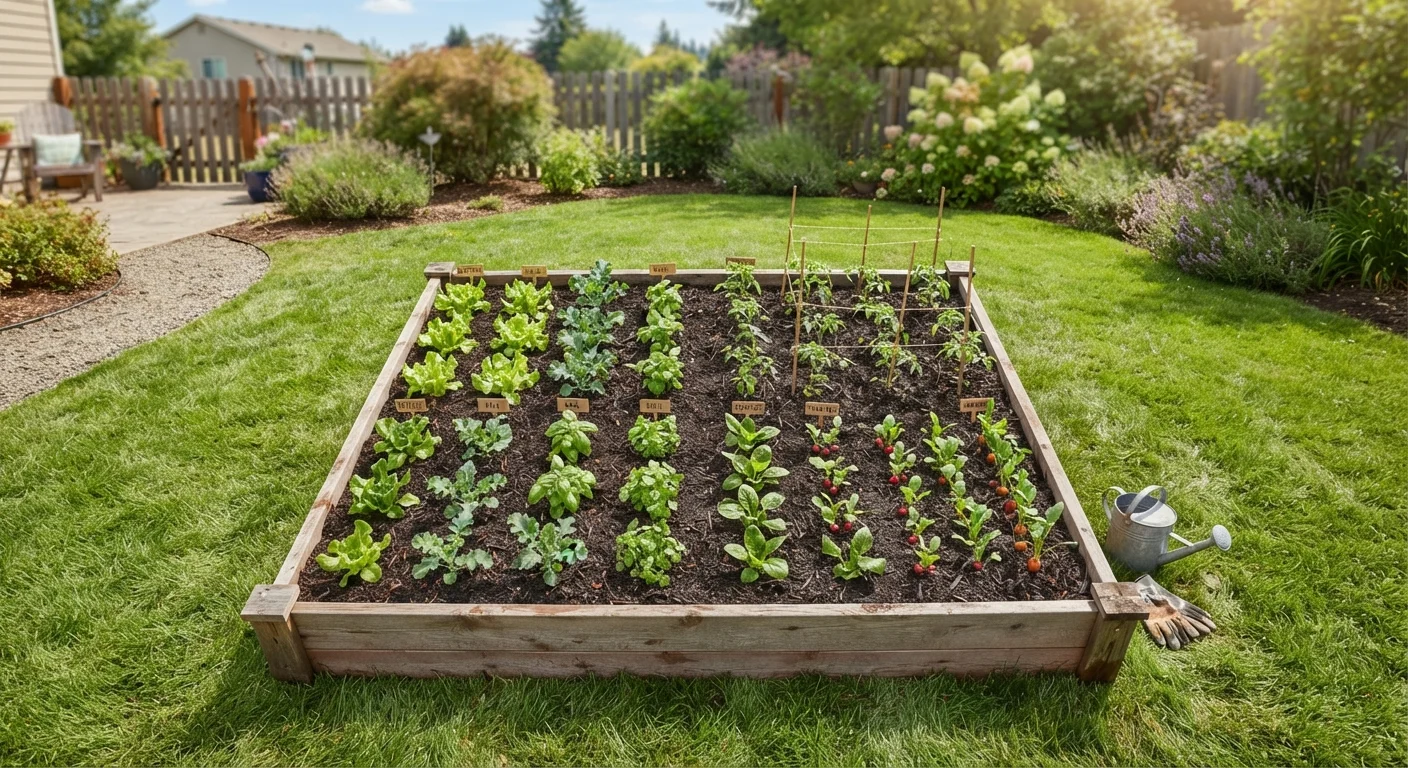
If you're building a raised bed, fill it with a blend of topsoil, compost, and an aerating material like perlite or coarse sand. Avoid using straight garden soil in raised beds - it compacts quickly and drains poorly.
Raised Bed Mix Formula That Works
A reliable raised bed soil blend is roughly 60% topsoil, 30% compost, and 10% coarse perlite or vermiculite. This mixture holds moisture without becoming waterlogged and gives roots room to spread freely. Mix thoroughly before filling your bed for even distribution.
What to Plant First
One of the most common beginner mistakes is planting too many things at once. For your first season, limit yourself to four to six vegetable types that are well-matched to your climate and your schedule.
A practical starter selection for most U.S. regions:
- Lettuce and salad greens - fast-growing, harvestable in 30-45 days, and tolerant of cool temperatures in spring and fall.
- Radishes - ready to eat in as little as 3 weeks; excellent for impatient beginners who want early results.
- Green beans (bush variety) - direct-sow seeds after the last frost; low-maintenance and productive.
- Zucchini - one or two plants will produce abundantly; requires little attention once established.
- Cherry tomatoes - more forgiving than larger tomato varieties; start as transplants rather than from seed for the most reliable results.
Pay attention to seed packet and transplant tags, which list days-to-maturity and spacing requirements. Crowding plants reduces air circulation and invites disease. When in doubt, follow the recommended spacing - it will feel sparse at first but fills in quickly.
Watering, Feeding, and Basic Upkeep
Once plants are in the ground, consistent care makes the difference between a struggling garden and a productive one. The three core habits to build are watering properly, feeding at the right time, and staying ahead of weeds.
Watering
Most vegetables need approximately one inch of water per week. Water deeply and infrequently rather than applying small amounts daily - deep watering encourages roots to grow downward toward consistent moisture. Morning watering is preferable because foliage dries before evening, reducing fungal disease risk. A simple rain gauge helps you track how much natural precipitation your garden receives.
Feeding
If you added compost during soil prep, you may not need supplemental fertilizer for the first several weeks. As plants grow and begin to fruit, heavier feeders like tomatoes benefit from a balanced granular or liquid fertilizer applied according to product instructions. Avoid over-fertilizing with nitrogen - it produces lush foliage at the expense of fruit production.
Weeding and mulching
Pull weeds while they're small, before they set seed. A 2-3 inch layer of mulch (straw, wood chips, or shredded leaves) suppresses weeds, retains soil moisture, and keeps roots cool during summer heat. It's one of the most time-saving habits in the garden.
Common Beginner Mistakes to Avoid
Most first-season setbacks are preventable. Being aware of these common missteps gives you a real head start:
- Overplanting: A 4×8-foot bed can feel enormous in April and completely overgrown by July. Start smaller than you think you need to.
- Ignoring the frost calendar: Planting warm-season crops too early exposes them to damaging cold. Know your last frost date and plan around it.
- Inconsistent watering: Irregular moisture - especially in tomatoes - contributes to problems like blossom end rot and fruit cracking. Steady rhythms matter more than occasional deep soaks.
- Skipping labels: Once seedlings emerge, they look remarkably similar. Label everything at planting time.
- Not tending to pruning and plant health: As plants mature, removing damaged or dead leaves improves air circulation. Our guide to pruning shrubs and perennials offers transferable principles for working with established plants.
Gardening rewards patience and observation. Keep a simple journal of what you planted, when you planted it, and what happened - that record becomes your most valuable resource heading into next season.
Frequently Asked Questions
A 4×8-foot raised bed or a 10×10-foot in-ground plot is plenty for a beginner. Starting small helps you manage watering, weeding, and harvesting without feeling overwhelmed. You can always expand once you have one successful season under your belt.
Timing depends on your USDA hardiness zone and what you're planting. Cool-season crops like lettuce and peas go in early spring; warm-season crops like tomatoes and peppers go in after your last frost date. Check your local cooperative extension service for frost dates specific to your area.
Both approaches work well. In-ground planting is lower cost and suitable when your native soil is workable. Raised beds offer better drainage, less bending, and easier soil control - especially useful if your yard has compacted or contaminated soil.
Most vegetables need about one inch of water per week, either from rain or irrigation. Water deeply and less frequently rather than a light daily sprinkle. Checking the top inch of soil for dryness is a reliable guide for when to water.
Lettuce, radishes, green beans, zucchini, and cherry tomatoes are consistently beginner-friendly. They germinate reliably, grow quickly, and tolerate minor care mistakes. Herbs like basil and chives are also rewarding and easy to start alongside vegetables.
If you've amended your soil with compost before planting, supplemental fertilizer may not be needed right away. Heavy-feeding plants like tomatoes and corn often benefit from additional feeding mid-season. A soil test can tell you exactly what nutrients your garden may be lacking.
The content on this site is provided for informational purposes only and should not be considered a substitute for professional advice. While we strive to provide accurate and up-to-date information, we make no guarantees regarding its completeness or accuracy. Always consult a qualified professional for advice specific to your circumstances before making any decisions