

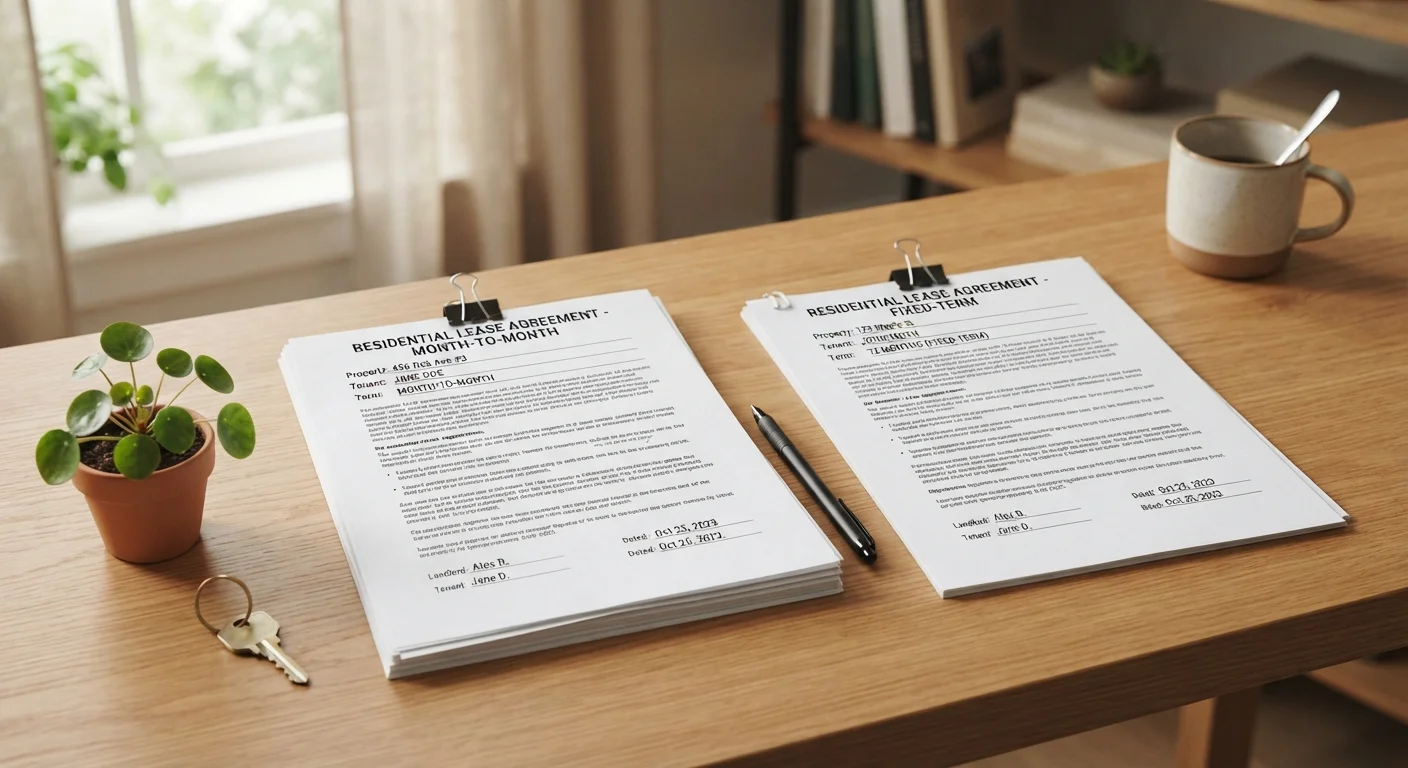
Option A
Month-to-Month Lease
The flexible, rolling arrangement for renters who need adaptability.
Best for: Renters facing life transitions, uncertain timelines, or those who prioritize the freedom to relocate with short notice.
Option B
Fixed-Term Lease
The stable, locked-in agreement for renters who value predictability.
Best for: Renters with steady jobs, established routines, and a clear plan to stay in one place for a defined period.
What Each Lease Type Actually Means
A lease is a legally binding contract between a tenant and a landlord that defines the terms of occupancy. The two most common structures differ primarily in how long the agreement lasts and what happens at the end of that period.
A fixed-term lease runs for a predetermined period - most commonly 12 months, though six-month and two-year terms also exist. Once signed, both parties are bound to those terms for the full duration. Your rent is typically fixed, your tenancy is secured, and neither party can unilaterally change the core conditions mid-lease without legal consequence.
A month-to-month lease (sometimes called a periodic tenancy) renews automatically each month unless either party provides notice to end it. The notice required varies by state, but 30 days is a widely used standard. This structure can arise at the start of a tenancy or when a fixed-term lease expires and both parties simply continue without signing a new one.
For a deeper look at the underlying language of either agreement, see Lease Agreements, Plain and Simple, which covers key clauses and what you're actually agreeing to.
| Criterion | Month-to-Month Lease | Fixed-Term Lease |
|---|---|---|
| Lease duration | Renews automatically each month | Set period, typically 12 months |
| Rent stability | Can change with proper notice | Locked in for the full term |
| Tenant's notice to leave | Typically 30 days (varies by state) | Must fulfill term or pay penalties |
| Landlord's notice to end tenancy | Typically 30 days (varies by state) | Generally cannot end tenancy early |
| Monthly cost | Often 10-20% higher than fixed-term | Usually lower, locked-in rate |
| Housing security | Lower - landlord can give notice | Higher - occupancy guaranteed through term |
| Best market fit | Softer or transitional rental markets | Competitive, high-demand markets |
The Real Trade-Offs: Flexibility vs. Stability
Neither lease type is inherently better - the right choice depends on your circumstances. Understanding each structure's genuine costs and benefits helps you weigh what matters most.
Month-to-Month: The Flexibility Premium
Rolling leases appeal to renters who need the ability to move with minimal friction. Job changers, people navigating a divorce, those testing out a new city, or anyone in a transitional life stage often find the month-to-month structure worth the premium. That premium is real: landlords commonly charge 10-20% more per month than they would for an equivalent fixed-term unit, because they carry more turnover risk.
Crucially, the flexibility runs both ways. A landlord can also terminate a month-to-month tenancy with proper notice - meaning your housing is less certain over the long run. This is not a hypothetical risk in a competitive rental market.
Fixed-Term: Predictability at a Cost
A 12-month lease gives you a locked rent rate and a guaranteed right to occupy the unit through the lease end date - protections that matter in markets where rents are rising. The tradeoff is reduced flexibility. Breaking a fixed-term lease early typically triggers penalties outlined in your agreement, which can include forfeiting your security deposit, paying several months' rent, or being liable for rent until a new tenant is found.
If you're weighing these trade-offs alongside a possible home purchase, Renting vs. Buying: The Trade-Offs Worth Thinking Through offers broader context on the financial and lifestyle dimensions of that decision.
~30 days
Typical notice period to end a month-to-month tenancy
Most US states require at least 30 days written notice from either party, though some states mandate longer periods for longer tenancies.
12 months
Standard fixed-term lease length in the US
The 12-month term is the most common fixed rental agreement, according to standard industry practice reported by the National Apartment Association.
10-20%
Typical rent premium for month-to-month arrangements
Landlords frequently charge a premium above the equivalent fixed-term rate to offset increased turnover risk and vacancy uncertainty.
Practical Situations That Should Guide Your Decision
The right lease structure aligns with your actual life situation, not an abstract preference for flexibility or stability. Here are the key factors to honestly assess before signing.
Your Employment and Income Certainty
If your job is stable and your income predictable, a fixed-term lease typically works in your favor. If you're freelancing, in a probationary period at a new employer, or expecting a significant income change, month-to-month keeps your options open.
Your Timeline in the Area
Renters who are confident they'll stay in a city or neighborhood for at least 12 months benefit most from fixed-term agreements. Those who anticipate a move - for family reasons, a planned relocation, or simply being unsure - are better served by rolling tenancies.
Local Rental Market Conditions
In tight rental markets with low vacancy rates, landlords have less incentive to offer month-to-month arrangements, and when they do, the premium is typically steep. In softer markets, landlords may be willing to negotiate more flexible terms without a significant surcharge. Understanding what's normal in your local market is essential context - the Housing Market hub offers current trend breakdowns to help you calibrate.
Lease Renewal as a Decision Point
Many tenants on a fixed-term lease face a choice at renewal: sign another term, switch to month-to-month, or move. This is an important leverage moment. For guidance on handling that conversation, see Navigating a Lease Renewal.
If this is your first rental experience, Your First Apartment: What to Know Before You Sign Anything walks through what to look for before putting pen to paper.
This article is for general informational purposes only and does not constitute legal or financial advice. Lease laws and notice requirements vary by state and locality. Consult a qualified attorney or housing counselor for guidance specific to your situation.
The content on this site is provided for informational purposes only and should not be considered a substitute for professional advice. While we strive to provide accurate and up-to-date information, we make no guarantees regarding its completeness or accuracy. Always consult a qualified professional for advice specific to your circumstances before making any decisions