

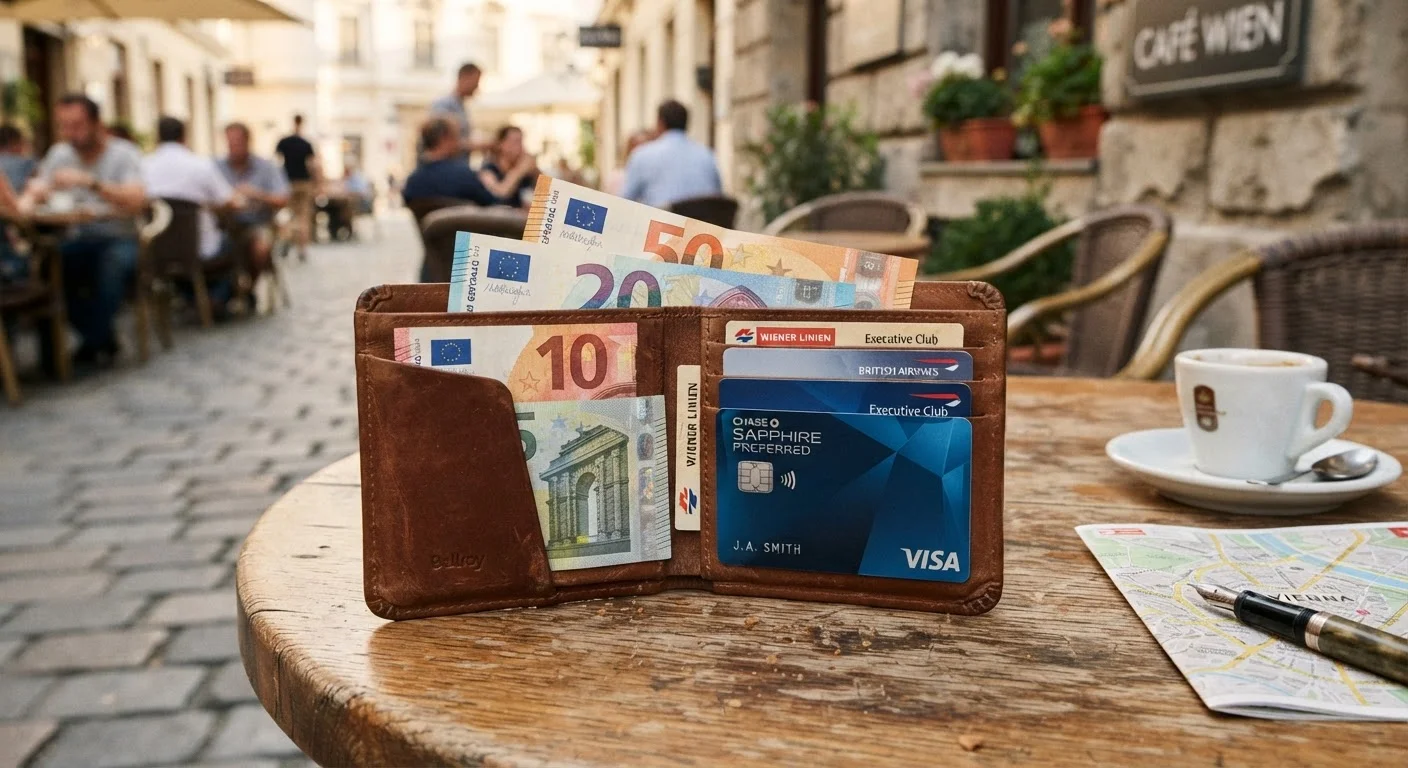
Option A
Carrying Cash
The universal fallback with real-world limits.
Best for: Markets, rural destinations, and countries where card acceptance is limited or unreliable.
Option B
Using Cards Abroad
The convenient, trackable, and often cheaper option.
Best for: Urban travelers who prioritize security, fee transparency, and real-time spending oversight.
The Core Trade-Off: Control vs. Convenience
Every international traveler eventually faces the same question: how should I pay for things? The honest answer is that neither cash nor cards is universally superior - each involves real costs, real risks, and real advantages depending on where you're going and how you travel.
Cash gives you total control at the point of payment. There are no processing intermediaries, no network outages, and no dependency on a functioning card terminal. In many parts of the world - particularly rural Southeast Asia, parts of Central America, and much of sub-Saharan Africa - cash remains the dominant, sometimes only, payment method. That said, physical currency offers no recourse if it's stolen or lost, and exchanging money itself comes with costs that vary dramatically by location. Our guide on how currency exchange actually works is worth reviewing before you convert any money.
Cards, meanwhile, offer convenience and a paper trail. Most major card networks apply exchange rates close to the interbank rate - generally more competitive than what you'll find at airport kiosks or hotel desks. They also provide fraud protection that cash simply cannot replicate. The trade-off is that fees can be layered and opaque, and in destinations with unreliable infrastructure, a card is only as useful as the terminal accepting it.
| Criterion | Carrying Cash | Using Cards Abroad |
|---|---|---|
| Acceptance | Universal, including cash-only vendors | Wide in cities; limited in rural areas |
| Exchange rate quality | Varies; often less favorable via kiosks | Generally near interbank rate (fee-free cards) |
| Fees | Exchange spread + possible commission | Foreign transaction fees (0-3%); ATM fees |
| Fraud / theft recovery | None - loss is permanent | Zero-liability protection; remote freeze |
| Spending tracking | Manual only | Real-time alerts and statements |
| Infrastructure dependency | None | Requires functioning terminal or ATM |
| Emergency usability | Immediately available if on hand | Can be blocked; replacement takes time |
Understanding the Real Costs
Fees are where many travelers get caught off guard. Cash costs appear upfront - in the exchange rate spread you receive and any commission charged by the exchange provider. Card costs can be harder to spot.
Foreign transaction fees are charged by many card issuers on purchases made in a foreign currency, typically ranging from 1% to 3% of each transaction. Over a two-week trip, those percentages accumulate into a meaningful sum. Some cards - particularly travel-oriented ones - waive these fees entirely, which is worth factoring into how you choose which card to carry.
ATM fees are another layered cost. Your home bank may charge a flat fee per withdrawal, the ATM's local bank may add its own fee, and the exchange rate applied may carry a spread. Withdrawing larger amounts less frequently can reduce the flat-fee impact, though it also means carrying more cash.
One specific trap to watch for: Dynamic Currency Conversion (DCC). This occurs when a card terminal or ATM offers to charge you in your home currency rather than the local currency. The exchange rate applied is set by the merchant, not your bank, and is almost always less favorable. Always choose to be charged in the local currency when given the option. For a broader look at the safety dimension of these choices, see our piece on cash vs. cards safety trade-offs.
1%-3%
Typical foreign transaction fee range
Many US card issuers charge this percentage on each international purchase; some travel-focused cards waive it entirely.
$5+
Common flat ATM withdrawal fee
Your home bank and the local ATM operator may each charge separate flat fees per withdrawal, making frequent small withdrawals costly.
~$0
Cash theft recovery
Unlike card fraud, stolen or lost cash has no dispute process or reimbursement mechanism - the loss is typically total and immediate.
Safety, Loss, and Recovery
The safety calculus differs significantly between cash and cards. Stolen or lost cash is unrecoverable. There is no dispute process, no reimbursement mechanism, and no way to freeze it remotely. This makes how much cash you carry - and how you carry it - a genuine risk management decision.
Cards offer stronger protections. Most major card issuers in the US provide zero-liability policies on unauthorized transactions, and a lost or stolen card can be frozen immediately via a mobile app or phone call. A replacement card can often be dispatched within days, though this varies by issuer. The digital trail cards create can also be valuable for tracking suspicious activity quickly.
That said, cards introduce their own vulnerabilities. Skimming devices at ATMs, phishing attempts on shared Wi-Fi, and data breaches are real risks. Taking precautions - using ATMs attached to reputable bank branches, avoiding unsecured networks for financial transactions, and enabling real-time transaction alerts - significantly reduces exposure. Our article on protecting your data while traveling covers these digital risks in depth.
The practical recommendation most experienced travelers arrive at is a hybrid approach: a modest amount of local cash for small purchases, tips, and cash-only vendors, combined with a low-fee card for larger transactions and as a primary payment tool. Before you leave, review our pre-departure financial checklist to make sure your bank is notified and your fees are understood. For extended trips, the complete guide to managing money on an extended trip offers a deeper framework for long-term financial planning on the road.
This article provides general financial information for educational purposes only and does not constitute personalized financial advice. Fees, policies, and conditions vary by card issuer and destination. Always verify current terms with your bank and consult official government sources for entry and currency regulations before traveling.
The content on this site is provided for informational purposes only and should not be considered a substitute for professional advice. While we strive to provide accurate and up-to-date information, we make no guarantees regarding its completeness or accuracy. Always consult a qualified professional for advice specific to your circumstances before making any decisions