

Why a Prepared Traveler Is a Safer Traveler
Most travel emergencies - a stolen wallet, a medical episode, a missed connection due to a natural disaster - become significantly more manageable when you already have the right information at your fingertips. The challenge is that stress and disorientation make it hard to recall even simple details. That's why preparation isn't just about peace of mind; it's a practical strategy.
Before any trip, run through the travel safety preparation checklist to confirm your contacts, copies, and resources are in order. This reference guide covers exactly what to compile and why each element matters.
Emergency Contacts to Have Before You Depart
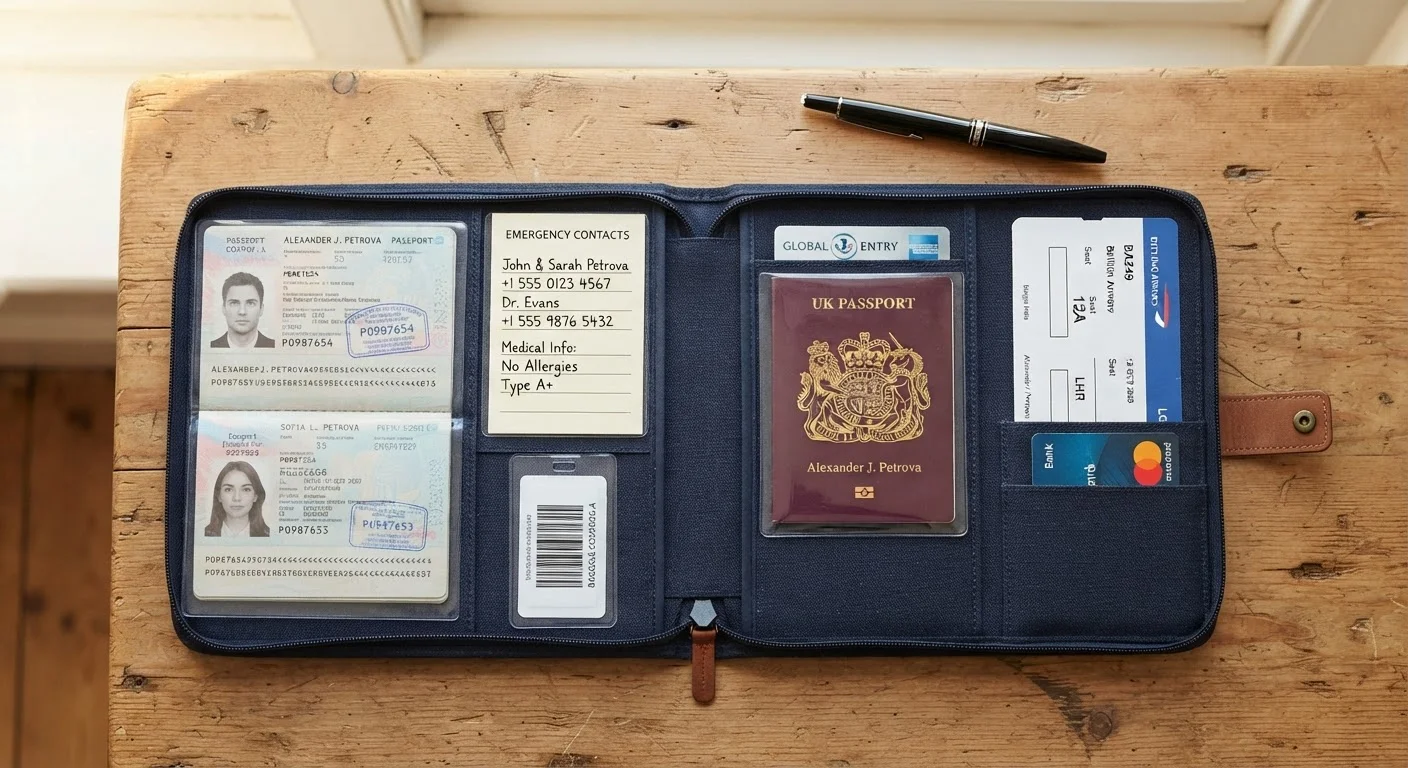
Compile the following contacts in a format you can access without internet - a notes app that works offline, a printed card in your bag, or both.
- U.S. Embassy or Consulate in your destination country: The U.S. Department of State's website lists every overseas post with phone numbers. Embassy staff can assist with lost or stolen passports, emergency passport issuance, and connections to local legal or medical resources. Verify this information is current directly at travel.state.gov before departure.
- Local emergency services numbers: 911 is not universal. Look up the local equivalent for police, fire, and ambulance in each country you're visiting. In the European Union, 112 is widely used; many other countries have distinct numbers.
- Your travel insurance provider's 24-hour assistance line: Many policies include emergency medical coordination, evacuation logistics, and legal referrals - but only if you call the right number from the start.
- Your primary care physician or a trusted family contact at home: Useful if local medical staff need your health history, allergy information, or next-of-kin details.
- Your bank's international fraud and card assistance line: Found on the back of your card. Know it before your card gets blocked abroad. See also the pre-departure financial checklist for steps to notify your bank before travel.
Documents to Copy and Store Securely
Losing original documents abroad is serious, but having verified copies dramatically speeds up replacement. Keep physical photocopies separate from originals - in a different bag - and store digital scans in a secure, password-protected cloud location.
STEP (Smart Traveler Enrollment Program)
A free service from the U.S. Department of State that allows American citizens traveling or living abroad to register their trip with the nearest U.S. Embassy or Consulate. It enables the government to contact travelers during emergencies.
Travel Advisory
An official government assessment of safety and security conditions in a foreign country or region, issued by agencies such as the U.S. Department of State. Advisories range from general awareness notices to recommendations against all travel.
Emergency Medical Evacuation
A service - typically provided through travel insurance - that arranges and funds transport of an ill or injured traveler to an appropriate medical facility, sometimes including repatriation to the traveler's home country.
Consular Assistance
Help provided by a U.S. Embassy or Consulate to American citizens abroad. It can include issuing emergency passports, providing lists of local attorneys or doctors, and notifying family members of an emergency.
International Driving Permit (IDP)
A document that translates your U.S. driver's license into multiple languages and is recognized in many countries as a valid supplement to your domestic license. Requirements vary by country.
Documents to copy:
- Passport (photo page and any relevant visa stamps)
- Driver's license and any international driving permits
- Travel insurance policy and emergency contact page
- Itinerary, hotel confirmation numbers, and airline booking references
- Health insurance card and a brief summary of any prescriptions or medical conditions
- Emergency contact list (separate from your phone, which could be stolen)
For guidance on passport validity requirements and entry documents, refer to passport, visa, and entry requirements for American travelers.
To protect digital copies of sensitive documents on your phone or laptop, review how to keep your personal data safe on everyday devices.
Key Resources and Reference Points During a Crisis
Beyond contacts and documents, knowing where to turn for authoritative, real-time information is essential - especially during events like political unrest, severe weather, or public health developments.
- U.S. Department of State - travel.state.gov: Country-specific travel advisories, emergency contact numbers for every U.S. embassy, and the Smart Traveler Enrollment Program (STEP), which allows Americans to register their trip so the government can reach them in an emergency.
- Centers for Disease Control and Prevention (CDC) - wwwnc.cdc.gov/travel: Destination health notices, recommended vaccinations, and outbreak alerts. Always verify with a healthcare provider before any medical decisions.
- Your airline or cruise line's emergency line: Separate from general customer service. Keep it noted - rebooking after a disruption is faster when you have a direct line.
- Local tourism police or tourist assistance hotlines: Many popular destinations maintain dedicated services for travelers who have been robbed or who need translation assistance.
For environmental and weather-related emergencies specifically, the guide to natural disasters and extreme weather preparedness outlines how to assess risk and respond effectively. For comprehensive pre-trip organization, the full trip planning checklist is a reliable starting point.
This article is for general informational purposes only. Travelers should verify all emergency contacts, entry requirements, and safety advisories directly with official government sources and their service providers before departing. This is not a substitute for professional medical, legal, or financial advice.
The content on this site is provided for informational purposes only and should not be considered a substitute for professional advice. While we strive to provide accurate and up-to-date information, we make no guarantees regarding its completeness or accuracy. Always consult a qualified professional for advice specific to your circumstances before making any decisions