

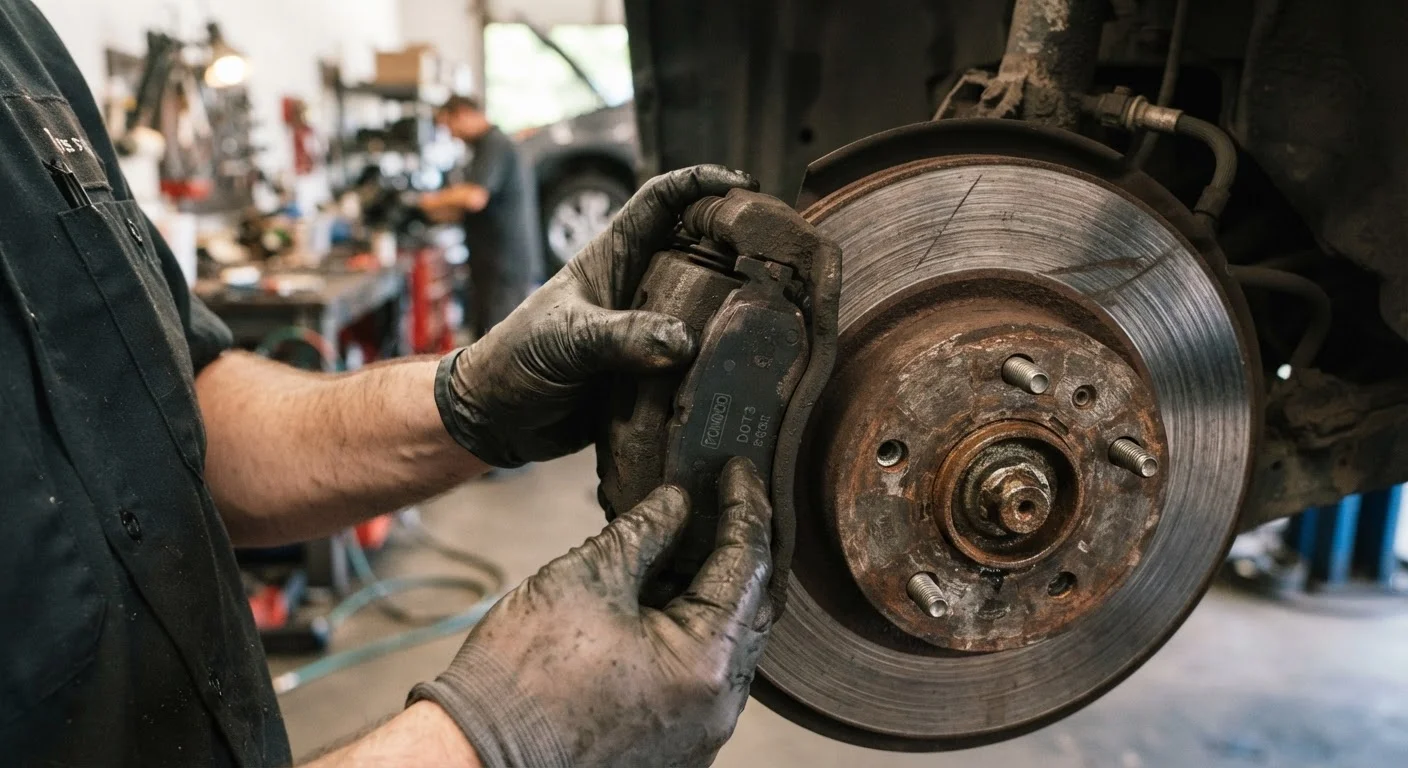
Why Brake Pad Wear Deserves Your Attention
Brake pads are a consumable part of your vehicle's braking system-they're designed to wear down over time. The friction material on each pad gradually diminishes with every stop you make. When that material runs too thin, stopping distances increase, other brake components take on damage, and the overall safety of the vehicle declines.
The good news is that brake wear rarely happens without warning. Your car communicates through sound, feel, and sometimes even smell. The challenge is knowing what those signals mean and acting on them before they become serious problems. Understanding the common mistakes drivers make around brake pad wear is the most practical starting point.
As part of your broader vehicle upkeep, brake health fits naturally alongside other routine checks. Our pre-trip safety walkthrough outlines how a quick visual check before driving can help you stay ahead of developing issues.
Common Mistakes Drivers Make With Brake Pad Wear
Most brake-related problems don't start with a catastrophic failure-they start with a small warning that gets ignored or misread. Below are the most common errors drivers make when it comes to recognizing and responding to brake pad wear.
Dismissing the initial squealing noise as a temporary or weather-related issue.
Why it happens: Brakes can squeal briefly after sitting overnight or in humid conditions, which leads many drivers to assume the sound is harmless and will go away on its own.
Waiting for a grinding sound before scheduling an inspection.
Why it happens: Drivers often set a mental threshold of "I'll get it checked when it sounds really bad," not realizing grinding means pad material is already gone and metal is contacting metal.
Ignoring a soft, spongy, or low brake pedal feel.
Why it happens: Pedal feel changes gradually, so drivers adapt to the new normal without realizing stopping distances have increased or that there may be air in the brake lines or low brake fluid.
Skipping brake inspections during routine maintenance visits.
Why it happens: Brake inspections aren't always part of a standard oil change, and drivers don't always think to ask. Out of sight under the wheel often means out of mind.
Assuming all four brake pads wear at the same rate.
Why it happens: It's natural to think of brakes as a uniform system, but front brakes on most vehicles handle significantly more stopping force than rear brakes.
Don't Rely on Mileage Alone
Brake pad life varies widely based on driving style, vehicle weight, and terrain. City driving with frequent stops wears pads far faster than highway driving. Always treat unusual sounds or pedal feel as signals worth investigating-regardless of how recently your brakes were serviced.
It's also worth noting that driving conditions affect wear rates significantly. Frequent stop-and-go city traffic, mountain driving with long descents, and towing heavy loads all accelerate brake pad wear compared to steady highway miles. If your driving involves any of these, build in more frequent checks. Similarly, seasonal changes affect braking performance-cold weather can temporarily affect pad grip and brake fluid behavior.
What to Do When You Suspect Brake Wear
If any of the warning signs described above sound familiar, the next step is getting a professional inspection-not continuing to monitor the situation from behind the wheel. A qualified mechanic can measure pad thickness, check rotor condition, and assess caliper function in a way no visual check from the driver's seat can replicate.
When to Stop Driving Immediately
If you hear metal-on-metal grinding, feel the vehicle pulling hard to one side during braking, or notice a significant loss of stopping power, treat these as urgent safety concerns. Do not continue driving - have the vehicle inspected by a qualified mechanic as soon as possible. These symptoms can indicate brake pad material is fully depleted, which risks damaging rotors and compromising your ability to stop safely.
For everyday drivers wondering where brake inspection falls on the DIY spectrum, it's generally a task for a professional. Unlike checking tire pressure or topping off wiper fluid, brake systems involve hydraulic components and safety-critical tolerances. Our guide on DIY car maintenance versus shop visits can help you understand where that line is. And while you're keeping up with vehicle health, proper tire pressure is another easy-to-overlook factor that affects braking effectiveness and overall safety.
25%
Of vehicles have dangerously worn brake pads
According to the Car Care Council, approximately 25% of vehicles inspected during car care awareness events show brake system issues that need attention.
3-7 mm
Typical new brake pad thickness
New brake pads generally measure between 10-12 mm; replacement is commonly recommended when thickness drops to around 3-4 mm, varying by vehicle manufacturer guidelines.
Staying informed and acting early keeps repair costs down and, more importantly, keeps you and others on the road safer. Brake pads are designed to be replaced-the only real mistake is waiting too long to do it.
The content on this site is provided for informational purposes only and should not be considered a substitute for professional advice. While we strive to provide accurate and up-to-date information, we make no guarantees regarding its completeness or accuracy. Always consult a qualified professional for advice specific to your circumstances before making any decisions