

Our Verdict
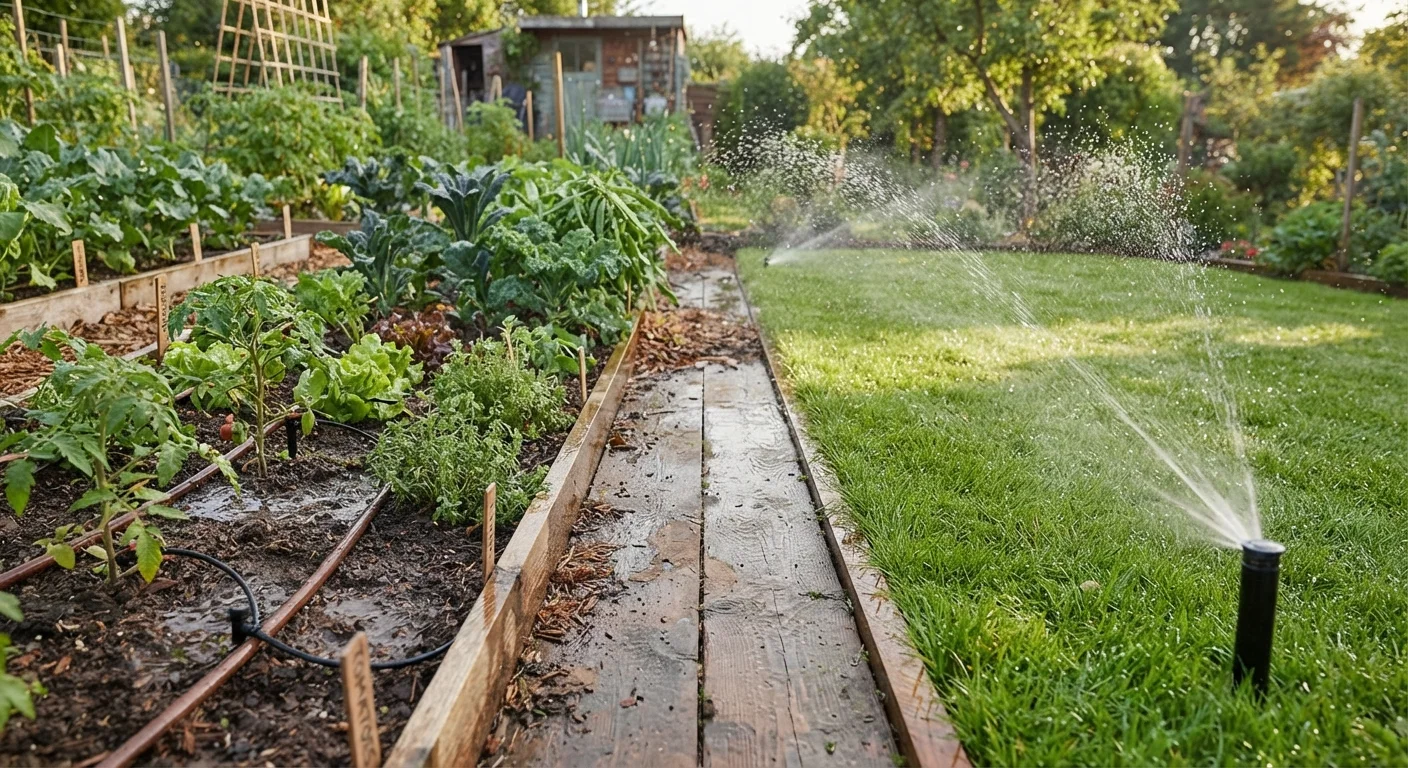
Neither drip irrigation nor sprinkler systems is universally superior - the right fit depends on what you're watering and your local water conditions. Drip excels in garden beds, vegetable plots, and landscaped areas where targeted watering matters. Sprinklers remain the practical choice for established lawns and open turf areas.
| Best for | Recommended |
|---|---|
| Vegetable gardens, raised beds, and shrub borders | Drip Irrigation |
| Established lawns and large open turf areas | Sprinkler Systems |
| Water-restricted regions or households with high utility costs | Drip Irrigation |
| First-time homeowners wanting a low-complexity setup for turf | Sprinkler Systems |
How Each System Works
Understanding the mechanics of each system helps clarify where each one fits in a home garden.
Drip irrigation uses a network of flexible tubing and small emitters - sometimes called drippers or micro-sprayers - to deliver water slowly and directly to the base of individual plants. Water seeps into the root zone with minimal surface runoff. Systems can be pressure-regulated and fitted with timers, allowing precise control over volume and timing.
Sprinkler systems distribute water through a series of heads mounted at or near ground level - or on pop-up risers - that spray water outward in arcs or circles. They are designed to cover broad surface areas and mimic the effect of rainfall. Most residential setups use a zone-based controller that sequences different areas of the yard on a timer.
If you're new to managing outdoor systems, our home maintenance overview for first-time owners covers how irrigation fits into your overall property upkeep.
Water Efficiency and Plant Health
Water efficiency is one of the most meaningful distinctions between these two systems.
Drip irrigation is generally more efficient because it minimizes evaporation and delivers moisture where plants actually absorb it - at the roots. Surface foliage stays dry, which can reduce the likelihood of certain fungal problems that thrive in wet-leaf conditions. For vegetable gardens and ornamental beds, this targeted approach also suppresses weed germination by leaving the soil surface between plants dry.
Sprinkler systems, by contrast, wet both soil and foliage. A portion of the water is lost to evaporation - particularly during midday watering or in hot, windy conditions. However, for turf grass, which requires even moisture distribution across large areas, sprinklers remain the more practical tool. Grass roots are shallow and widespread, making overhead watering well-suited to the job.
To avoid common watering mistakes regardless of your system, see our article on watering myths that harm gardens.
30-50%
Water savings with drip vs. overhead irrigation
The EPA's WaterSense program notes that drip irrigation can use 30 to 50 percent less water than conventional overhead systems in comparable garden applications.
50%
Outdoor water use share in average U.S. household
According to the EPA, roughly 30 to 60 percent of household water use goes to outdoor irrigation, depending on region and season.
Installation, Cost, and Maintenance
Both systems require upfront planning, but they differ significantly in complexity and ongoing care.
| Drip Irrigation | Sprinkler Systems | |
|---|---|---|
| Best suited for | Garden beds, vegetables, shrubs | Lawns and wide turf areas |
| Water efficiency | High - targets root zone directly | Moderate - some evaporation loss |
| Installation complexity | Low to moderate - DIY-friendly | Moderate to high - often needs professional |
| Upfront cost | Generally lower | Generally higher |
| Maintenance | Emitter cleaning, tubing checks | Head adjustment, winterization |
| Foliage wetting | Minimal - leaves stay dry | High - overhead spray wets leaves |
| Weed suppression | Better - surface stays dry | Lower - wide soil surface moistened |
Drip irrigation starter kits are widely available and can often be assembled by a homeowner with basic tools in a few hours. The tubing is flexible and relatively forgiving to route around existing plantings. However, emitters can clog over time - especially in areas with hard water - and the tubing can be disrupted by digging, pests, or foot traffic. Annual inspection and occasional emitter replacement are typical maintenance tasks.
Drip lines also work well with mulched beds, as the tubing can be buried just beneath the surface layer, protecting it from UV degradation and reducing visibility. If your garden layout changes frequently, keep in mind that drip systems require some reconfiguration when plants are added or relocated.
In-ground sprinkler systems generally involve more complex installation - trenching, pipe fitting, and connection to a water supply line. Many homeowners hire a licensed irrigation contractor for this work, particularly if it involves tapping into the main supply or navigating local permit requirements. Check with your local municipality before beginning any in-ground irrigation project, as permit requirements vary by region.
Sprinkler heads need periodic adjustment to maintain correct coverage and avoid watering hardscape or sidewalks. Winterization - draining lines before freezing temperatures - is essential in colder climates to prevent pipe damage. Our spring lawn and garden readiness checklist includes seasonal irrigation prep steps worth reviewing.
Matching Your System to Your Garden
The most effective approach often depends on what you're growing and where you live.
If your yard includes a mix of turf and planted beds - a common layout for American homes - a combination approach is worth considering. Many homeowners run sprinklers on lawn zones and use drip lines in adjacent garden beds, with both connected to the same timer controller. This allows each area to receive the appropriate watering method without overwatering or underwatering.
In regions with water-use restrictions or drought-prone climates, drip irrigation's lower water consumption per session can be a meaningful advantage. If you're also weighing how your landscaping choices affect water use more broadly, our comparison of native plants versus traditional landscaping explores how plant selection intersects with irrigation strategy.
For homeowners establishing new turf areas, irrigation timing relative to lawn establishment matters. Our guide to grass seed versus sod outlines watering needs during the establishment phase for each option.
Whatever system you choose, the goal is consistent, appropriate moisture delivery - not more water, but water applied at the right time, in the right place.
The content on this site is provided for informational purposes only and should not be considered a substitute for professional advice. While we strive to provide accurate and up-to-date information, we make no guarantees regarding its completeness or accuracy. Always consult a qualified professional for advice specific to your circumstances before making any decisions