

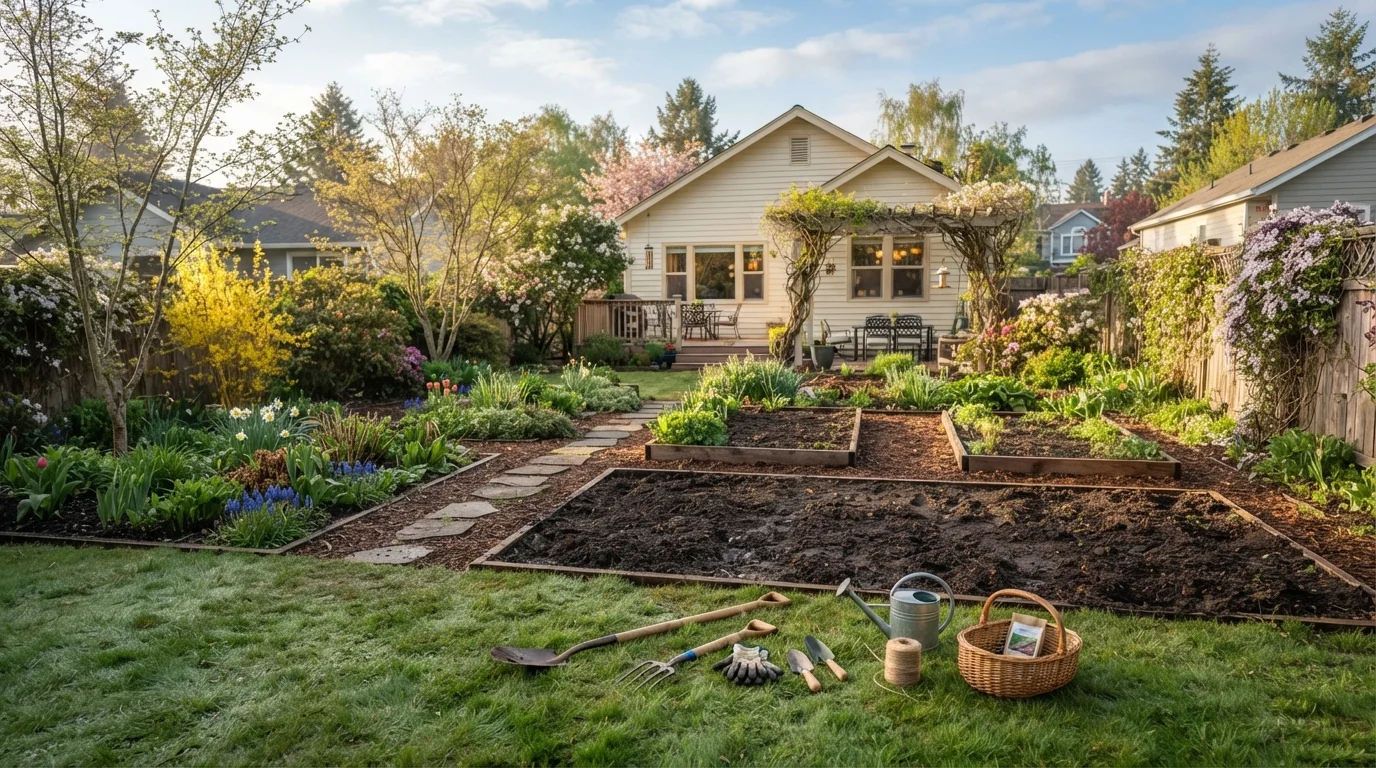
Summary
22 items · 1-3 hours spread across a weekend
Why a Spring Readiness Checklist Saves You Work Later
Spring is the highest-leverage moment in the outdoor care calendar. Tasks done correctly now - from soil prep to equipment maintenance - reduce the amount of troubleshooting, replanting, and pest management you'll deal with come summer. Done poorly or skipped entirely, they compound: compacted soil limits root growth, dull pruners spread disease, and a missed irrigation leak can quietly stress plants for weeks before you notice.
This checklist organizes spring yard tasks by category so you can work through them methodically rather than reactively. It pairs well with the broader spring home maintenance tasks that cover indoor and structural systems - together, they give you a complete seasonal reset. For a full month-by-month perspective, the seasonal lawn care reference is a useful companion throughout the year.
Soil Test Kit or Cooperative Extension Submission
Determines your soil's pH and nutrient levels so amendments are targeted rather than guesswork.
Garden Fork or Broadfork
Loosens compacted soil in beds without over-tilling, preserving soil structure.
Bypass Hand Pruners
Makes clean cuts on stems and small branches; essential for pruning perennials and shrubs.
Lawn Mower (blade sharpened)
Needed for the first spring mow; a sharp blade cuts cleanly and reduces stress on grass.
Broadcast or Drop Spreader
Distributes seed, fertilizer, or pre-emergent evenly across lawn areas.
Drip Line or Soaker Hose
Delivers water efficiently at the root zone; inspect for cracks before the growing season begins.
Sharpening Stone or File
Restores a clean edge on hoe blades, loppers, and pruner blades before use.
Compost or Aged Manure
Adds organic matter and beneficial microbes to garden beds, improving drainage and fertility.
How to Use This Checklist
Work through each group in order - soil and beds first, then lawn, then tools and irrigation. Items marked must are non-negotiable for a healthy outdoor season. Should items are strongly recommended and often prevent downstream problems. Nice-to-have tasks are worth doing if time and budget allow.
Timing varies by region. Homeowners in USDA hardiness zones 5-6 typically start outdoor spring tasks in late March through April, while zones 7-9 may begin in late February. Check your last expected frost date before transplanting seedlings or putting tender plants outdoors.
Know Your Last Frost Date Before Planting
Putting tender transplants or warm-season seeds outdoors before your area's average last frost date risks losing them entirely to an overnight freeze. Check the USDA Plant Hardiness Zone Map and your local cooperative extension service for frost date estimates specific to your ZIP code. Even within a zone, microclimates - low spots, north-facing beds, areas near pavement - can behave differently. Harden off transplants gradually over 7-10 days before moving them outdoors full-time.
Soil and Garden Bed Preparation
Lawn Assessment and Care
Pruning and Plant Care
Tools, Equipment, and Irrigation
Soil, Beds, and Planting Areas
Healthy soil is the foundation of everything that grows in your yard. Before adding compost, fertilizer, or new plants, it pays to understand what you're actually working with. A basic soil test - available through most cooperative extension offices - gives you pH and nutrient levels so you amend intentionally rather than by guesswork.
If you've thought about adding raised beds this season, review the key decisions around raised bed layout, depth, and soil before purchasing materials. For gardeners building organic matter over time, composting at home is one of the most cost-effective improvements you can make to any bed.
Lawn Care and Fertilizing
Your lawn's needs in spring depend largely on grass type. Cool-season grasses (Kentucky bluegrass, fescues, ryegrass) are actively growing and benefit from early attention, while warm-season grasses (Bermuda, zoysia, St. Augustine) should largely be left alone until soil temperatures reliably exceed 65°F.
One of the most common spring mistakes is fertilizing too early. Applying nitrogen before your grass is actively growing feeds opportunistic weeds instead. The article on lawn fertilizer timing explains how grass growth cycles should drive your application schedule - it's worth reading before you buy anything.
Don't Fertilize Frozen or Waterlogged Ground
Applying fertilizer to soil that is still frozen, saturated, or in the path of heavy runoff sends nutrients directly into storm drains and waterways rather than into your lawn. Wait until the ground is thawed, workable, and draining well before any application. When in doubt, delay by a week or two - the window for effective spring fertilizing is longer than most homeowners assume.
Tools, Equipment, and Irrigation
Tools cleaned and sharpened before the season starts last longer and do less damage to plants. A dull pruner crushes stems rather than cutting cleanly, leaving ragged wounds that invite fungal disease. Sharpen mower blades, oil moving parts, and replace worn-out items before you need them urgently.
Irrigation systems stored through winter often develop cracked fittings or clogged emitters. Run your system through a full cycle before planting season to identify leaks and pressure issues. If you're weighing drip irrigation versus sprinkler systems, spring is the ideal time to install or upgrade before plants are established. For pruning guidance specific to shrubs and perennials, the resource on pruning timing and technique covers what to cut and what to leave alone by plant type.
If this checklist prompts a broader look at fall and winter preparation, bookmark the fall home walkthrough checklist for when the season turns again.
The content on this site is provided for informational purposes only and should not be considered a substitute for professional advice. While we strive to provide accurate and up-to-date information, we make no guarantees regarding its completeness or accuracy. Always consult a qualified professional for advice specific to your circumstances before making any decisions