

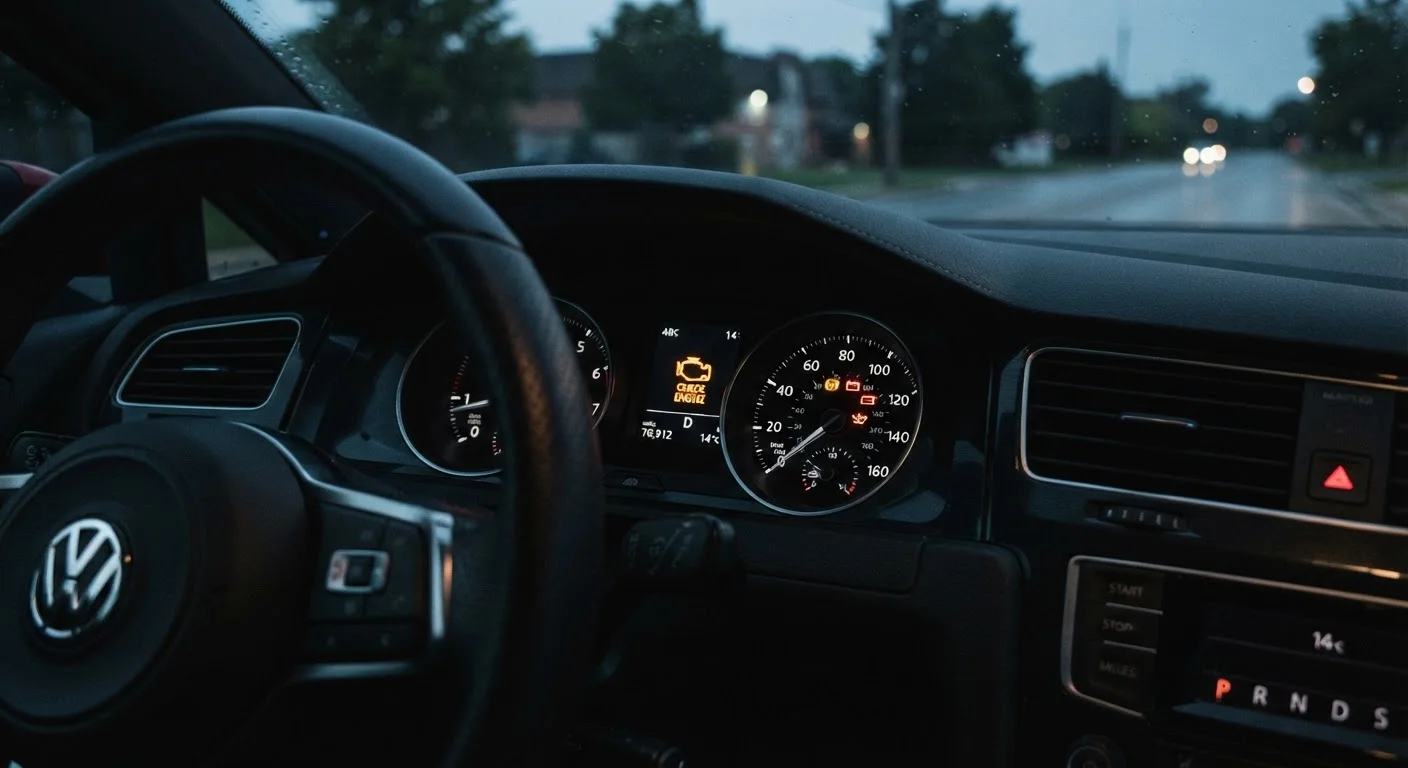
What the Light Actually Does
Your vehicle constantly monitors itself. Dozens of sensors track everything from exhaust composition to fuel mixture to engine timing. When one of those readings falls outside acceptable parameters, the engine control module (ECM) - essentially the car's central computer - logs a diagnostic trouble code and triggers the check engine light.
This system doesn't tell you exactly what's wrong in plain English. It stores a code. A scan tool - available at most auto parts stores or in any mechanic's shop - reads that code and points toward the affected system. Think of the light as your car raising its hand, and the fault code as the note it passes you.
The light can appear in amber or orange and usually shows a small engine icon, sometimes with the word "Check" or "Service" nearby. A separate warning - oil pressure or temperature, for instance - will have its own dedicated indicator. The check engine light is specific to the emissions and powertrain management systems.
The Light Covers More Than the Engine
Despite its name, the check engine light monitors systems beyond the engine itself - including the transmission, fuel system, and emissions controls. The term "check engine" is a legacy label that has stuck even as the OBD-II system expanded in scope. When it illuminates, think of it as a check on your powertrain and emissions systems broadly, not just the engine block.
Steady vs. Flashing: The Difference Matters
Not all check engine lights carry the same urgency. The way the light behaves gives you an important first clue:
- Steady light: The issue is present but not immediately catastrophic. Your car detected something outside normal operating range - perhaps an oxygen sensor reading slightly off, or a small evaporative emissions leak. You can typically drive cautiously to a shop within the next day or two, but don't put it off indefinitely.
- Flashing or blinking light: This is a more serious signal. A flashing check engine light most often indicates an active engine misfire - unburned fuel entering the exhaust, which can damage the catalytic converter quickly. Reduce your speed, avoid aggressive driving, and have the vehicle inspected as soon as possible.
If the check engine light comes on alongside other warning indicators - low oil pressure, overheating, or a sharp loss of power - treat the combination as an urgent situation and stop driving when it is safe to do so.
Get a Free Code Read Before You Pay for a Diagnosis
Many national auto parts retailers offer complimentary OBD-II code reads in their parking lots. Knowing your fault code before visiting a shop gives you a reference point and helps you have a more informed conversation with the mechanic. Write down the code - it's yours, and you're entitled to it.
Common Triggers You Should Know
Fault codes span hundreds of possible causes, but a handful account for the majority of check engine light events in everyday vehicles:
- Loose or faulty gas cap: The evaporative emissions system requires a sealed fuel tank. A gas cap that wasn't tightened after fueling - or one with a cracked seal - can trigger the light. Tighten or replace the cap and the light may clear itself after a few drive cycles.
- Oxygen (O2) sensor failure: These sensors measure exhaust gases to help the ECM fine-tune the fuel-air mixture. A failing sensor can reduce fuel efficiency and, if left unchecked, damage the catalytic converter.
- Catalytic converter inefficiency: Often triggered by a code like P0420, this indicates the converter isn't reducing emissions effectively. It can result from neglected O2 sensor issues or engine problems upstream.
- Spark plug or ignition coil issues: Worn plugs or a failing coil can cause misfires - the condition most associated with a flashing CEL.
- Mass airflow (MAF) sensor: This sensor measures incoming air to calibrate fuel delivery. A dirty or failing MAF can cause rough idling, poor fuel economy, and a check engine light.
For a broader view of your vehicle's documented history, reading a vehicle history report can reveal whether recurring issues were flagged in the past - useful context when buying used or troubleshooting persistent problems.
~1 in 3
Cars on U.S. roads with an unaddressed CEL
Industry estimates suggest roughly one-third of vehicles in operation have an active check engine light that has not been diagnosed or repaired.
P0420
Among the most common OBD-II fault codes
Catalytic converter efficiency codes are consistently among the most frequently logged trouble codes in OBD-II equipped vehicles across the U.S.
1996
Year OBD-II became standard in the U.S.
The EPA mandated OBD-II compliance for all passenger cars and light trucks sold in the United States from model year 1996 onward.
When to Drive On vs. When to Stop
Making the right call in the moment matters. Use these guidelines as a starting framework - not a guarantee, since every situation is different:
| Situation | Suggested Action |
|---|---|
| Steady light, no other symptoms | Drive cautiously; schedule a diagnostic soon |
| Steady light after fueling | Check and retighten gas cap; monitor over next few drives |
| Flashing light | Reduce speed; avoid highways; get inspected promptly |
| Light plus rough running or power loss | Pull over safely if possible; call for assistance |
| Light plus temperature or oil warning | Stop driving when safe; do not continue until inspected |
Getting a free code read at an auto parts store can give you a fault code number before you visit a mechanic - which helps you arrive informed. Understanding what separates a DIY fix from a shop job is worth knowing before you decide how to proceed.
Staying ahead of potential issues starts before you turn the key. A quick pre-drive check - as outlined in a pre-trip safety walkthrough - can catch developing symptoms early. And keeping up with your manufacturer's service intervals, as described in reading your owner's manual maintenance schedule, reduces the likelihood of many check engine light triggers in the first place.
A driver notices the check engine light comes on immediately after filling up at the gas station. No other symptoms appear and the car runs normally.
On the highway, the check engine light begins flashing and the engine feels rough and hesitant under acceleration.
A check engine light has been steady for three weeks on a used car a driver recently purchased. The car seems to run fine.
Frequently Asked Questions
It depends on how the light behaves. A steady light generally means you can drive cautiously to a shop in the near term. A flashing or blinking light indicates a more urgent issue, such as an engine misfire, and you should reduce your speed and have the vehicle inspected as soon as possible to avoid further damage.
A faulty or loose gas cap is one of the most frequent - and easiest to fix - triggers. Other common causes include a failing oxygen sensor, a worn spark plug, a failing catalytic converter, or a malfunctioning mass airflow sensor.
You can clear the code using an OBD-II scan tool, but the light will return if the underlying problem hasn't been fixed. Clearing the code without addressing the root cause is not a solution and may mask a worsening issue.
Many auto parts retailers will read your fault code for free. A formal diagnostic inspection at a repair shop typically ranges in cost and varies by region and shop. The diagnostic fee is often credited toward the repair if you proceed with the work.
In most U.S. states, a vehicle with an illuminated check engine light will automatically fail an emissions or smog inspection. The light must be off - and the underlying issue resolved - before the vehicle can pass.
There's no universal safe window. Some issues flagged by the light are minor and slow to worsen, while others can accelerate engine damage within a short drive. Treating any active check engine light as something to diagnose within a few days is the most prudent approach.
The content on this site is provided for informational purposes only and should not be considered a substitute for professional advice. While we strive to provide accurate and up-to-date information, we make no guarantees regarding its completeness or accuracy. Always consult a qualified professional for advice specific to your circumstances before making any decisions