

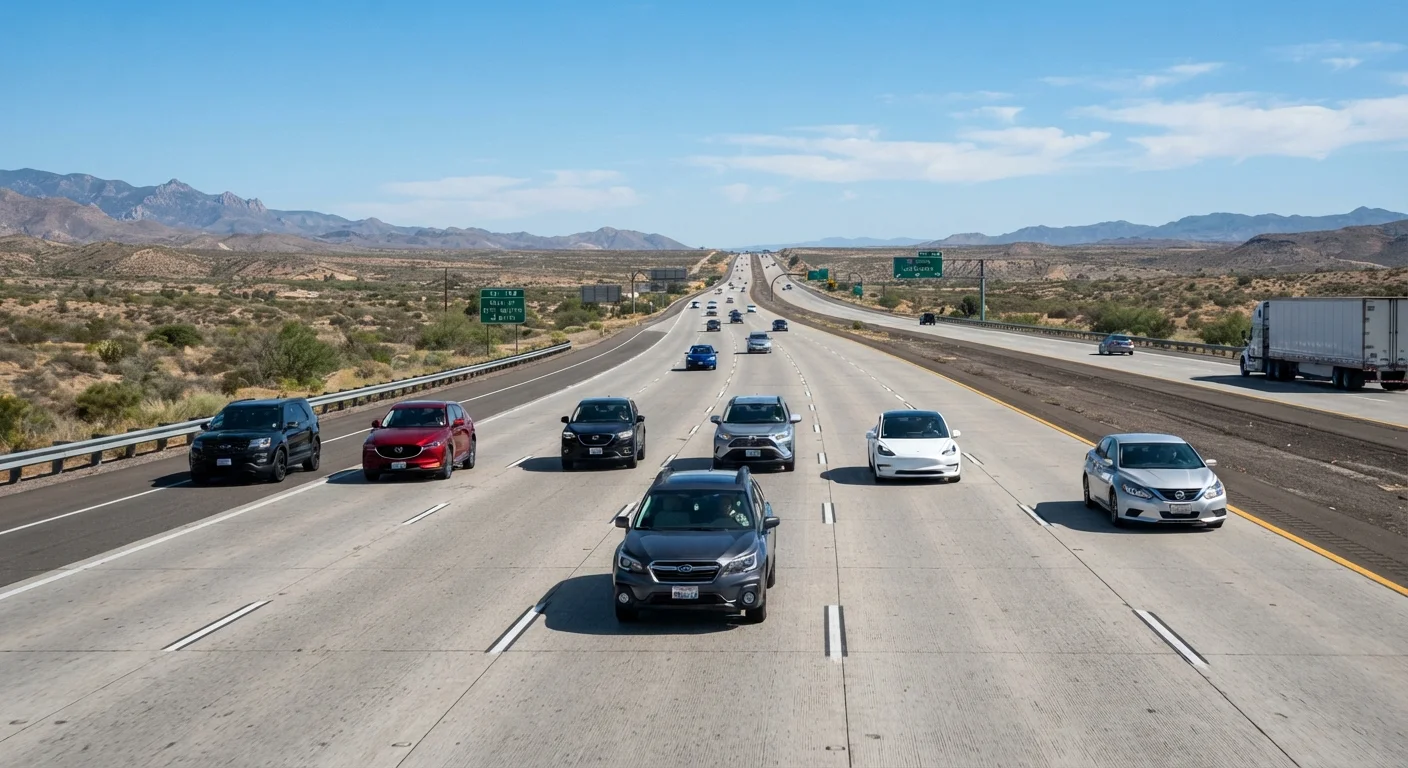
Why Highway Driving Demands a Different Mindset
At 70 mph, a vehicle travels roughly 103 feet every second. That physics reality is why habits that work fine in city traffic can fall dangerously short on the interstate. Small errors become large consequences when speeds are high and traffic is dense.
Experienced drivers understand this and adjust accordingly - not by driving fearfully, but by building consistent habits that create more time and space to respond. These aren't advanced techniques reserved for race drivers. They're practical, repeatable behaviors that any driver can adopt. Pair them with the principles in our guide to defensive driving for a comprehensive approach to road safety.
Maintain at least a three-second following distance at highway speeds - more in adverse conditions.
At 65-70 mph, stopping distances are far longer than most drivers intuitively expect. A three-second gap provides a meaningful buffer to react if traffic ahead slows suddenly. Rain, worn tires, or heavy vehicles extend the stopping distance further.
Scan far ahead - at least 12-15 seconds down the road - not just the car immediately in front.
Looking further ahead gives drivers earlier warning of slowing traffic, debris, or merge conflicts. It also naturally smooths out small speed fluctuations, reducing the chain-reaction braking that contributes to rear-end crashes.
Signal early and change lanes with a single, deliberate movement rather than a gradual drift.
Predictability is the currency of safe highway driving. Other drivers adjust to your behavior based on your signals - the earlier you signal, the more time they have to accommodate you. Drifting slowly into an adjacent lane creates ambiguity that can trigger sudden reactions.
Stay out of other drivers' blind spots, especially around large trucks and SUVs.
Spending extended time alongside another vehicle - particularly a large commercial truck - means you may not be visible to that driver at all. Trucks have significant blind zones on both sides, behind, and directly in front.
Stop and rest every two hours during extended highway drives rather than pushing through fatigue.
Fatigue degrades reaction time, judgment, and attention in ways drivers often fail to self-assess accurately. Proactive rest stops are more effective - and safer - than trying to recognize impairment after it has already set in.
Keep your vehicle properly maintained, especially tires, brakes, and lights, before highway travel.
Highway speeds amplify the consequences of mechanical failures. A tire blowout at 70 mph is far more dangerous than at 30 mph. Routine maintenance reduces the likelihood of failures that drivers have no time to manage at high speed.
Core Habits That Reduce Highway Risk
The practices below reflect what consistently safe highway drivers do - before, during, and after high-speed travel. They're grounded in how vehicles actually behave at speed and how human attention works under sustained driving conditions.
Before any highway trip, a quick vehicle check matters more than many drivers realize. Tire pressure, fluid levels, and lighting problems are far easier to address in your driveway than on the shoulder of an interstate. Our pre-trip safety walkthrough covers exactly what to check and why.
Lane Management and Situational Awareness
Highway crashes often trace back to lane changes and merges gone wrong - not blowouts or mechanical failures. Experienced drivers treat lane discipline as an active, ongoing practice rather than something they think about only when changing lanes.
Every vehicle has blind zones that mirrors can't fully cover. Understanding where your blind spots are and building a habit of shoulder-checking before lateral movement is one of the most straightforward ways to lower your personal crash risk on multi-lane roads. Similarly, improper merging is a leading contributor to highway collisions - our companion piece on where drivers go wrong during lane changes breaks down the most common errors.
One often-overlooked habit: once you've settled into a lane at highway speed, resist the urge to change lanes frequently. Every lane change is a moment of elevated risk. Moving with purpose - and signaling well in advance - makes your intentions readable to drivers around you.
Right-of-Way on Highway On-Ramps
A common misunderstanding: vehicles on the interstate do not legally have to yield to merging traffic in most U.S. states - merging drivers bear the primary responsibility for finding a gap. That said, experienced highway drivers often adjust speed or position to help traffic flow smoothly when it's safe to do so. Understanding the actual rules matters; see our article on right-of-way assumptions for a clearer picture.
Speed also plays a more nuanced role than many drivers assume. The posted limit represents a maximum under favorable conditions, not a target in all circumstances. Rain, fog, construction zones, and heavy traffic all call for speed reductions below the posted limit. For a deeper look at this distinction, see our article on speed limits versus safe speed.
Managing Fatigue and Sustaining Focus
Drowsy driving is one of the most underreported and underestimated highway hazards. Research from the National Highway Traffic Safety Administration consistently links fatigue to thousands of fatal crashes annually. Unlike alcohol impairment, fatigue often creeps up without the driver noticing until it's already affecting performance.
Experienced long-haul drivers plan for fatigue proactively rather than pushing through it. Stopping every two hours or so for a short break - even just to walk around the vehicle - helps maintain alertness over long journeys. If you feel the early signs of drowsiness (heavy eyelids, drifting lane position, missing exits), pulling off safely and resting is the right call. Stimulants like caffeine can provide modest short-term help, but they don't substitute for rest.
~100,000
Drowsy driving crashes annually in the U.S.
The National Highway Traffic Safety Administration estimates drowsy driving causes approximately 100,000 police-reported crashes each year.
3 sec
Minimum recommended following distance at highway speed
Safety organizations and driver education programs broadly recommend a minimum three-second gap, increasing to four or more seconds in wet or reduced-visibility conditions.
Sustained highway focus also means actively managing distractions. Phone use - even hands-free - diverts cognitive attention from the road. Experienced drivers often set navigation, music, and climate controls before entering the highway, minimizing the need to interact with anything while at speed.
The content on this site is provided for informational purposes only and should not be considered a substitute for professional advice. While we strive to provide accurate and up-to-date information, we make no guarantees regarding its completeness or accuracy. Always consult a qualified professional for advice specific to your circumstances before making any decisions