

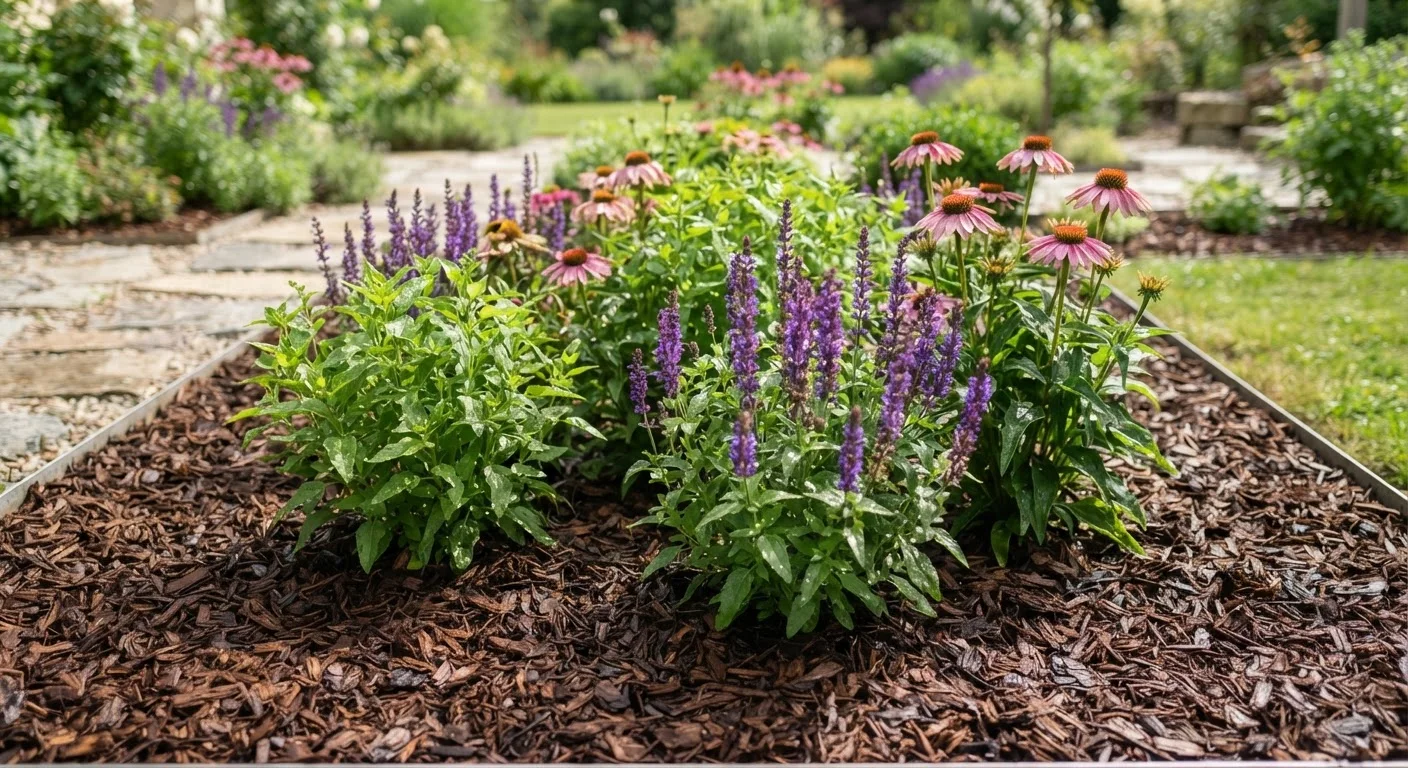
Our Verdict
Mulching is one of the most cost-effective and practical habits a gardener can adopt, but it works best when applied correctly and matched to the right conditions. The benefits - moisture retention, weed suppression, and soil health - are well-supported and meaningful. The drawbacks are largely avoidable with proper technique and informed material selection.
Mulching is ideal for homeowners who want lower-maintenance garden beds, whether they're managing ornamentals, vegetables, or native plantings across most U.S. climates.
What Mulching Actually Does
Mulch is any material - organic or inorganic - spread over the surface of garden soil to modify conditions around plant roots. The most common types used in American home gardens include shredded bark, wood chips, straw, pine needles, shredded leaves, and gravel or stone for inorganic options.
At its core, mulch functions as an insulating layer between the atmosphere and the soil. It slows evaporation, buffers temperature swings, and physically blocks weed seeds from germinating in sunlight. Organic mulches do something extra: as they break down, they add organic matter to the soil, supporting the microbes and earthworms that make soil more fertile over time.
Understanding what mulch does - and what it cannot do - helps you apply it strategically rather than reflexively. It's not a cure-all, but used well, it reduces workload and supports plant health in ways that are hard to replicate with any other single practice. For homeowners building out garden beds, it's worth reading alongside guidance on raised bed planning to see how mulch fits into the broader soil and layout picture.
The Real Benefits of Mulching
The advantages of mulching are well-documented among horticultural professionals and home gardeners alike. Here's what you can reasonably expect when mulch is applied correctly.
Significantly reduces water loss from soil evaporation
A consistent mulch layer can reduce soil moisture evaporation by 25-50%, meaning you water less frequently and plants experience less drought stress between waterings.
Suppresses weed germination and growth effectively
By blocking sunlight from reaching the soil surface, mulch prevents most annual weed seeds from germinating. Existing weeds that do emerge are typically easier to pull from mulched soil.
Moderates soil temperature throughout the season
Mulch insulates soil against summer heat spikes and winter freezes, reducing temperature stress on roots and extending the productive growing window in many climates.
Improves soil health as organic mulch decomposes
Shredded bark, leaves, and similar materials break down into organic matter that feeds beneficial soil microbes, improves drainage in clay soils, and adds structure to sandy soils over time.
Reduces soil erosion and compaction from rain
Mulch absorbs the impact of heavy rainfall, preventing water from displacing topsoil and compacting bare soil surfaces - a common problem in garden beds during summer storms.
Gives beds a clean, finished appearance
Beyond function, a uniform mulch layer gives garden beds a tidy, intentional look and clearly defines planting zones from surrounding lawn or hardscape.
25-50%
Reduction in soil moisture evaporation
Horticultural extension programs across the U.S. commonly cite this range as the moisture retention benefit of maintaining a proper mulch layer.
2-3 inches
Recommended mulch depth for most beds
This is the depth range most consistently recommended by cooperative extension services nationwide to balance weed suppression, moisture retention, and root oxygen access.
Up to 10°F
Soil temperature buffering in summer
Research from university extension programs suggests mulched soil can remain significantly cooler than bare soil on hot days, reducing heat stress on shallow roots.
Beyond these measurable gains, organic mulch also feeds your soil. As shredded bark or leaves decompose, they contribute carbon and nutrients, reducing dependence on supplemental fertilizers. In regions with heavy clay or compacted soil, this long-term organic input can meaningfully improve soil structure over several seasons. This complements the broader conversation around soil health - including what weeds reveal about your soil conditions.
The Drawbacks You Should Know
Mulch is not without downsides, and most of them stem from misapplication or choosing the wrong material. Being aware of these risks helps you avoid the most common mistakes.
Can harbor slugs, insects, and rodents if too thick
Dense mulch layers create cool, dark, moist conditions that attract slugs, earwigs, and in some cases, voles or mice. Keeping depth at 3 inches or less and pulling mulch away from structures reduces this risk.
Causes stem rot when piled against plant bases
Mulch touching woody stems or crowns traps moisture against bark and tissue, creating entry points for fungal disease and rot. This is one of the most common and damaging mulching errors homeowners make.
Can slow soil warming in spring if applied too early
Mulch insulates soil effectively - which is a drawback in early spring when you want the soil to warm up quickly to support seed germination and early root growth. Wait until soil has warmed before applying spring mulch.
May temporarily reduce nitrogen availability
Fresh wood chip mulch can temporarily tie up soil nitrogen during decomposition, which may affect nitrogen-hungry plants. This is most relevant in vegetable beds and is manageable with a supplemental nitrogen source.
Fine mulches can compact and shed water
Materials like sawdust or fine bark can form a dense mat that repels water rather than allowing it to penetrate. Choosing coarser materials or periodically raking the surface prevents this problem.
Watch for "Volcano Mulching"
One of the most widespread mulching mistakes is piling mulch in a cone shape against tree trunks or shrub stems - a practice sometimes called volcano mulching. This traps moisture against bark, encourages decay, and can attract boring insects. Always leave a gap of at least 2-3 inches of clearance between mulch and any woody stem or trunk. A flat, even layer that stops well short of the plant base is the correct approach.
Material choice also matters more than many homeowners expect. Fresh wood chips applied in large quantities around nitrogen-hungry vegetables can temporarily tie up soil nitrogen as they decompose. Fine-textured mulches like sawdust can compact and form a water-repelling crust if applied too thickly. Matching the mulch to the plant type and bed purpose reduces these risks considerably.
How to Mulch Correctly
Getting the technique right makes most of the drawbacks listed above avoidable. Follow these general guidelines regardless of which organic mulch you choose:
- Depth: Aim for 2-3 inches of coverage. Less than 2 inches provides limited weed suppression and moisture retention. More than 4 inches restricts oxygen and water movement to roots and increases pest harborage risk.
- Clearance: Keep mulch 2-3 inches away from the base of shrubs and trees, and 1-2 inches from the crowns of perennial plants. Piling mulch against stems - sometimes called "volcano mulching" - traps moisture and can cause bark rot or disease entry points.
- Timing: In most U.S. climates, applying mulch in late spring after the soil has warmed is preferable for annual beds. Fall mulching helps protect perennial roots during freeze-thaw cycles. Avoid mulching over frozen or waterlogged soil.
- Edging: Define bed edges before mulching to keep material contained and to prevent it from smothering lawn grass at bed borders.
Replenish organic mulches annually or whenever coverage thins below 2 inches. Because mulch affects soil moisture, it's worth pairing this practice with sound watering habits - many of which are counterintuitive, as explored in our look at common garden watering myths.
Choosing the Right Mulch for Your Garden
There is no universally "best" mulch. The right choice depends on your plants, climate, aesthetic preferences, and budget. Here's a practical overview:
- Shredded hardwood bark: Long-lasting, widely available, and visually tidy. A solid general-purpose choice for ornamental beds.
- Wood chips (arborist chips): Coarser texture, decomposes more slowly, excellent for pathways and around trees and shrubs. Not ideal directly around vegetable roots.
- Straw: Lightweight and cheap, popular in vegetable gardens. Breaks down quickly and may contain weed seeds if not from a clean source.
- Pine needles (pine straw): Suitable around acid-loving plants like azaleas and blueberries. Slow to decompose and resists compaction.
- Shredded leaves: Free and beneficial, though they can mat if applied too thickly. Best mixed with coarser material or partially composted first. For a related approach to returning organic material to the garden, see our overview of composting at home.
- Gravel or stone: Inorganic; doesn't break down or feed soil, but useful in low-water or Mediterranean-style gardens where organic matter buildup could cause issues.
Homeowners focused on ecological landscaping may also find that native plant beds have specific mulching considerations - explored further in the guide to native plants vs. traditional landscaping.
The content on this site is provided for informational purposes only and should not be considered a substitute for professional advice. While we strive to provide accurate and up-to-date information, we make no guarantees regarding its completeness or accuracy. Always consult a qualified professional for advice specific to your circumstances before making any decisions