

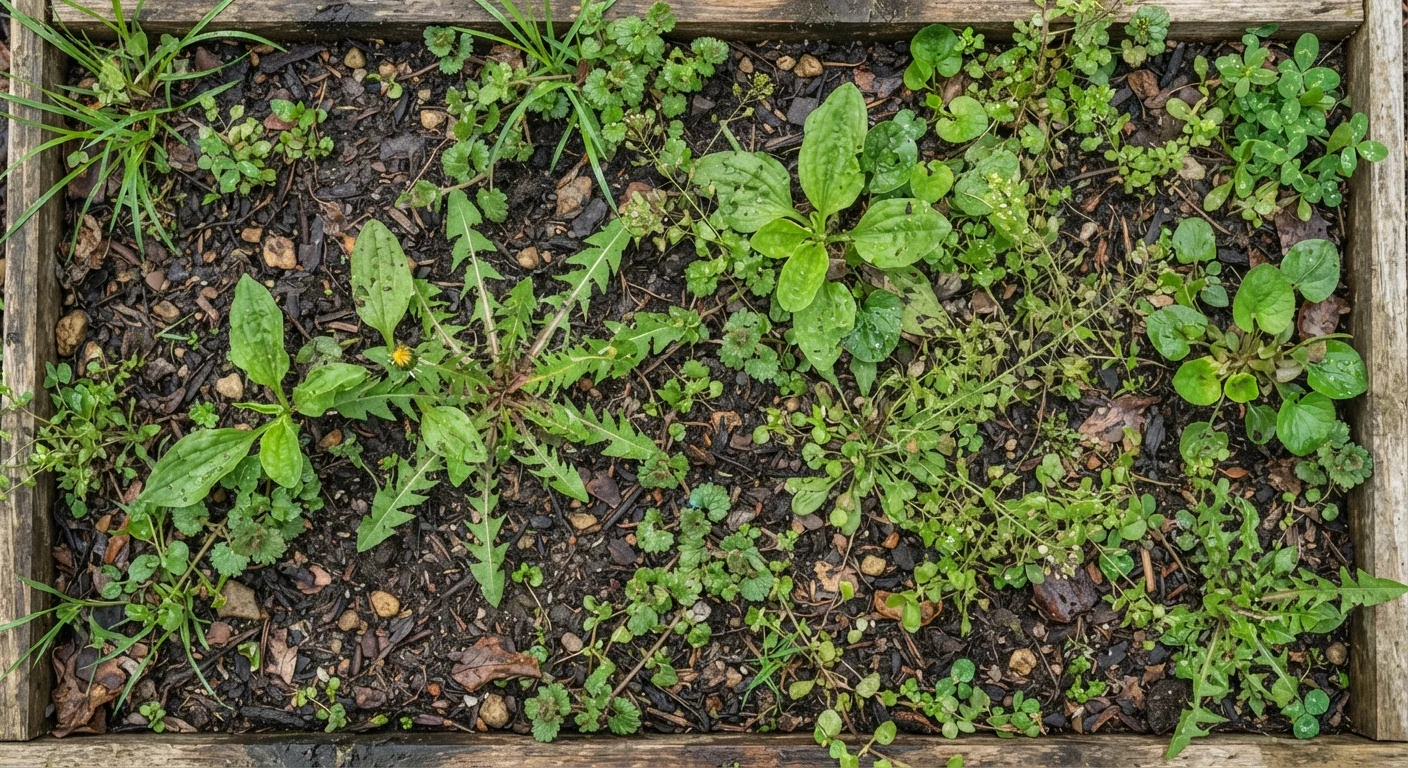
Why Weeds Keep Coming Back
If you've pulled the same weeds from the same spot season after season, the problem isn't your effort - it's that the soil conditions inviting those weeds haven't changed. Weeds are opportunists. They fill ecological gaps, and when your soil is compacted, waterlogged, nutrient-depleted, or off in pH, certain species are uniquely equipped to move in and stay.
Understanding this shifts the goal from weed removal to soil improvement. When you correct the conditions, desirable plants become more competitive and weeds lose their edge. That's a more durable outcome than pulling indefinitely.
Weeds as Indicators, Not Proof
Weed presence is a useful signal, not a certainty. A patch of clover doesn't guarantee nitrogen deficiency, and dandelions alone don't confirm compaction. Multiple overlapping clues - plus a soil test - give you a reliable picture. Use weed patterns to guide where you investigate, not to skip the investigation entirely.
Common Weeds and What They Signal
No single weed species is a guaranteed diagnosis, but recurring patterns are informative. Here's how to read some of the most common ones:
- Dandelions and broadleaf plantain: Both are strongly associated with compacted soil. Their deep taproots evolved to penetrate hard ground. If these dominate high-traffic areas or paths, compaction is a likely factor. Core aeration can help.
- Clover: Clover fixes atmospheric nitrogen, which means it thrives where soil nitrogen is low. A lawn blanketed in clover is often signaling a fertility problem. Check for nitrogen deficiency with a soil test before applying fertilizer.
- Horsetail and sedges: These ancient plants love wet, poorly drained conditions. Their persistence near low-lying areas or spots that stay soggy is a strong signal of drainage issues. See our article on signs your lawn has a drainage problem for more on root causes.
- Sorrel and wild violet: Both tend to favor acidic soils. Sorrel in particular has long been noted by gardeners as a low-pH indicator. If you're growing blueberries or azaleas nearby and they're thriving while other plants aren't, acidity may be at work across the whole bed.
- Chickweed: Often indicates fertile but poorly aerated soil. It also thrives in cool, moist conditions, so its presence may reflect a watering or drainage situation as much as a fertility one.
~6.0-7.0
Optimal soil pH range for most lawn grasses
According to university extension resources, most turfgrasses and common garden vegetables perform best within this pH window, outside of which nutrient availability drops sharply.
80%+
Of U.S. lawns affected by compaction
Soil compaction is widely cited by turfgrass researchers as one of the most common underlying causes of poor lawn health in residential settings, particularly in high-traffic yards.
Getting From Clues to Confirmation
Weed patterns are a starting point, not a conclusion. The next step is always a soil test. Home test kits can measure pH and sometimes basic nutrient levels, while tests through a cooperative extension service (offered in most U.S. states) provide a more complete picture including nitrogen, phosphorus, potassium, and organic matter content.
Once you have test results, you can act precisely. Acidic soil might need lime. Low nitrogen might need compost or a measured fertilizer application. Compaction needs physical remediation - aeration, amended topsoil, or reduced foot traffic - not just chemistry. Our guide on soil pH and why your plants keep struggling walks through testing and adjustment in more detail.
Fixing the Soil, Not Just the Symptom
Soil improvement takes time but pays off across every plant you grow - not just in fewer weeds. Some effective approaches based on common weed signals include:
- For compaction: Core aeration in fall or spring, followed by overseeding and topdressing with compost, helps break up dense layers and restore structure.
- For drainage problems: Adding organic matter improves moisture movement in both clay-heavy and sandy soils. In severe cases, grading or installing a French drain may be necessary - consult a landscaping professional for significant grading work.
- For low pH: Ground limestone (calcitic or dolomitic) is the standard amendment for raising pH in acidic soil. Application rates depend on your test results and soil type.
- For nutrient deficiency: Compost is a broadly beneficial starting point. Targeted amendments should follow what your soil test recommends rather than guessing.
Covering bare soil after correction - with mulch, ground cover, or seed - limits the window for weeds to reclaim territory. Our article on mulching garden beds covers how to use mulch effectively without creating new problems. And when the season turns, use a spring readiness checklist to build soil improvement into your routine before planting begins.
Test Before You Treat
Resist the urge to add amendments based on weed patterns alone. Over-liming, over-fertilizing, or over-aerating can create new problems. A soil test costs under $30 through most cooperative extension offices and gives you precise, actionable data. It's the single most cost-effective step you can take before any soil improvement project.
Frequently Asked Questions
Yes, in a general sense. Certain weed species have adapted to thrive in specific soil conditions, such as compaction, acidity, or poor drainage. Their presence is a useful clue, though not a definitive diagnosis - a soil test provides confirmation.
Plantain (both broadleaf and narrow-leaf varieties) is one of the most commonly cited indicators of compacted soil. Dandelions are also frequently associated with compaction, as their deep taproots are designed to penetrate hard ground.
Clover typically indicates low nitrogen in the soil. Because clover fixes its own nitrogen from the air, it out-competes grass in nitrogen-poor conditions. Addressing soil fertility often reduces clover over time.
Pulling weeds provides immediate visual relief, but without addressing the underlying soil condition, the same weeds - or others suited to those conditions - are likely to return. Fixing the root cause is the more durable solution.
A soil test kit (available at garden centers) or a test through your local cooperative extension office will give you a precise pH reading. Weeds like sorrel and horsetail may suggest acidity, but a test is required for confirmation.
Some can. Deep-rooted weeds like dandelions break up compacted layers and draw up nutrients. Clover adds nitrogen. That said, most weeds compete aggressively with cultivated plants, so managing them while addressing root problems is usually the right approach.
The content on this site is provided for informational purposes only and should not be considered a substitute for professional advice. While we strive to provide accurate and up-to-date information, we make no guarantees regarding its completeness or accuracy. Always consult a qualified professional for advice specific to your circumstances before making any decisions