

Recognizing the Warning Signs
Poor lawn drainage rarely announces itself all at once. More often, it shows up as a pattern of recurring symptoms that homeowners dismiss as normal wear. Learning to read these signs early can save significant time and money.
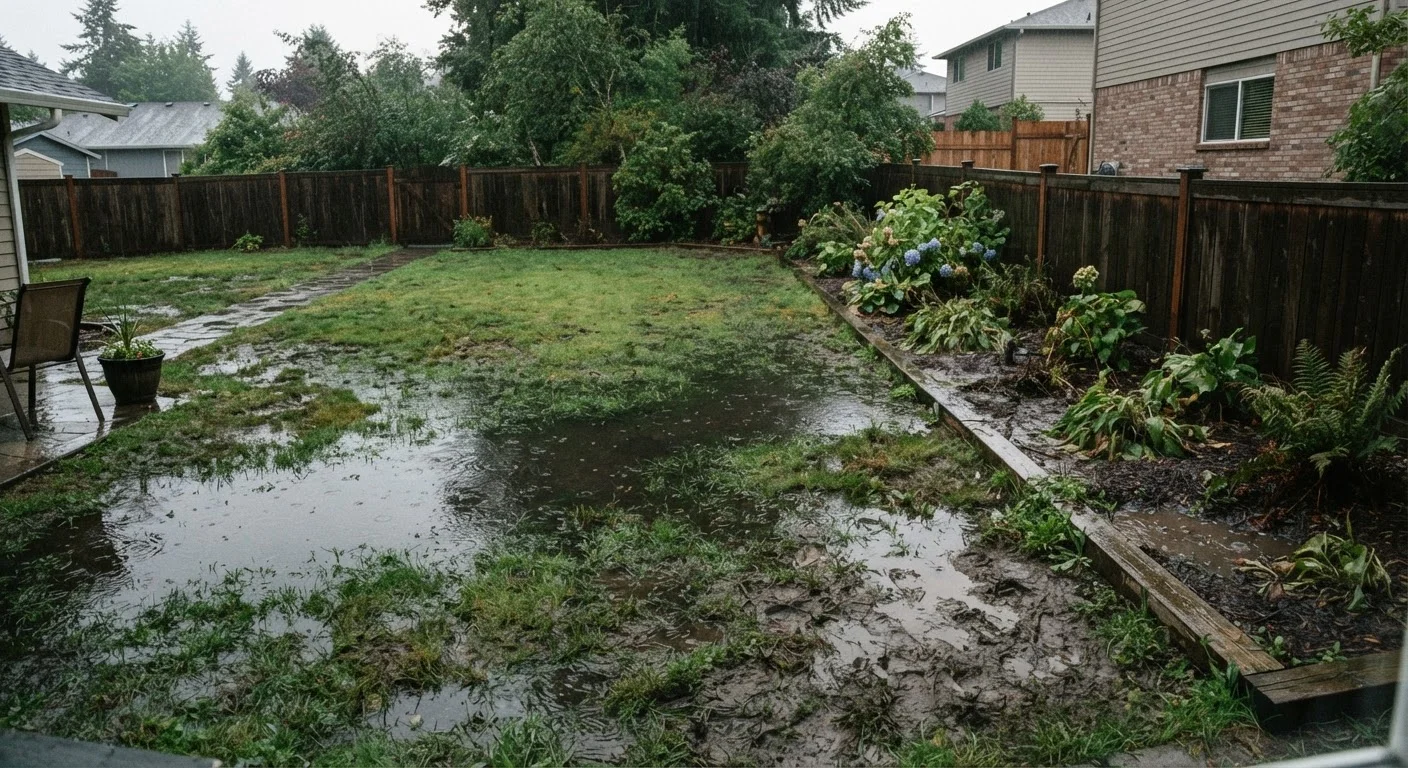
Standing or pooling water is the most obvious indicator. If water collects in the same spots of your yard after every rain and takes more than 24 to 48 hours to fully absorb, your lawn cannot drain water fast enough. This is distinct from brief, light flooding that resolves quickly.
Persistently soggy or spongy ground is another red flag. If you step onto the lawn and your foot sinks noticeably or you hear a squelching sound days after a rainstorm, the soil is saturated. Grass roots sitting in waterlogged soil are deprived of oxygen and begin to die.
Dead or yellowing grass patches in low-lying areas often point to root suffocation from excess moisture. These patches tend to worsen over time and resist reseeding if the underlying drainage issue isn't resolved. As weeds can signal soil conditions, the types of weeds invading these weak spots may also confirm waterlogging or compaction.
Moss growth in lawn areas is a softer but consistent clue. Moss thrives in consistently moist, shaded, or compacted conditions - all common partners of poor drainage.
Ignoring pooling water as a seasonal nuisance rather than a structural symptom.
Why it happens: Many homeowners assume standing water is normal after heavy rain and expect it to resolve on its own each season.
Reseeding bare or dead patches without fixing the underlying drainage issue first.
Why it happens: Visible dead grass feels like the problem, so homeowners address it directly - only to watch new seed fail repeatedly.
Aerating the lawn without addressing soil composition or grade problems.
Why it happens: Aeration is a well-known lawn care step, so homeowners apply it as a default fix for any drainage complaint.
Assuming gutter problems are unrelated to lawn drainage.
Why it happens: Gutters are thought of as a roof system, not a landscape system, so the connection to soggy yard areas near downspouts is often missed.
Installing French drains or dry creek beds without understanding the outlet requirements.
Why it happens: DIY drainage projects often focus on where water is collected, not where it needs to go, resulting in systems that back up or drain into a neighbor's property.
What's Actually Causing the Problem
Understanding the root cause is essential before attempting any fix. Drainage problems typically fall into a few recurring categories.
~30%
U.S. soils with significant clay content
According to USDA soil surveys, a substantial portion of American residential lots sit on clay-dominant soils that naturally impede drainage.
1 in./ft.
Recommended grade slope away from foundation
Building and landscaping guidelines generally recommend at least a one-inch drop per foot for the first ten feet around a home's foundation to direct water away.
Compacted soil is one of the most prevalent causes. When soil particles are pressed tightly together - from foot traffic, heavy equipment, or years of neglect - water cannot penetrate and instead runs off or pools on the surface. A simple test: push a screwdriver into dry soil. If it resists after just an inch, compaction is likely.
Clay-heavy soil naturally drains slowly because its fine particles hold water tightly. Yards built on clay substrates often struggle even with reasonable rainfall. This is a soil composition issue rather than a grading one, and it requires different solutions such as amending soil with organic matter or installing drainage infrastructure.
Poor grading - meaning the yard slopes toward the house rather than away - is a significant structural cause. Water should ideally flow away from the foundation at a slope of roughly one inch per foot for the first ten feet. When the grade is flat or reversed, water accumulates near the home. Left unaddressed, this can contribute to basement moisture problems and even foundation damage.
Blocked or insufficient gutters can also overwhelm your lawn's capacity to absorb water by dumping large volumes at concentrated points. Understanding how gutters work and when to maintain them is part of managing overall yard drainage.
Don't Attempt Regrading Near Utilities Yourself
Significant regrading of your yard can disturb buried utility lines, irrigation systems, and drainage pipes. Before moving large volumes of soil, contact your local utility notification service (call 811 in the U.S.) to have underground lines marked. Work requiring changes close to the home's foundation should involve a licensed landscape contractor or civil engineer to avoid creating new structural problems.
It's also worth noting that overwatering can mimic or worsen drainage symptoms. If your lawn appears waterlogged but rainfall has been light, review your irrigation schedule. Common watering myths may be contributing to conditions that look like drainage failure but are self-inflicted. Additionally, persistent moisture problems in the yard can eventually extend indoors - even small water issues compound over time when left unaddressed.
The content on this site is provided for informational purposes only and should not be considered a substitute for professional advice. While we strive to provide accurate and up-to-date information, we make no guarantees regarding its completeness or accuracy. Always consult a qualified professional for advice specific to your circumstances before making any decisions